Underground Oil Tank Removal in Baltimore, MD
A buried tank in a Baltimore yard comes out under a sequence with two thirty day clocks in it, one running toward the work and one running away from it. Filing the notice on the day you decide is what makes them fit.
- MDE notified thirty days before the excavation begins
- Certified UST remover or technician on the job
- Soil assessed in the open hole, not after backfill
- Tank rendered unfit and disposed of at an approved site
Buried Tank Details for a Baltimore Property
Say where the tank sits and whether the address is inside Baltimore City or in Baltimore County. Those two answers decide the whole sequence, and we will set it out for you.
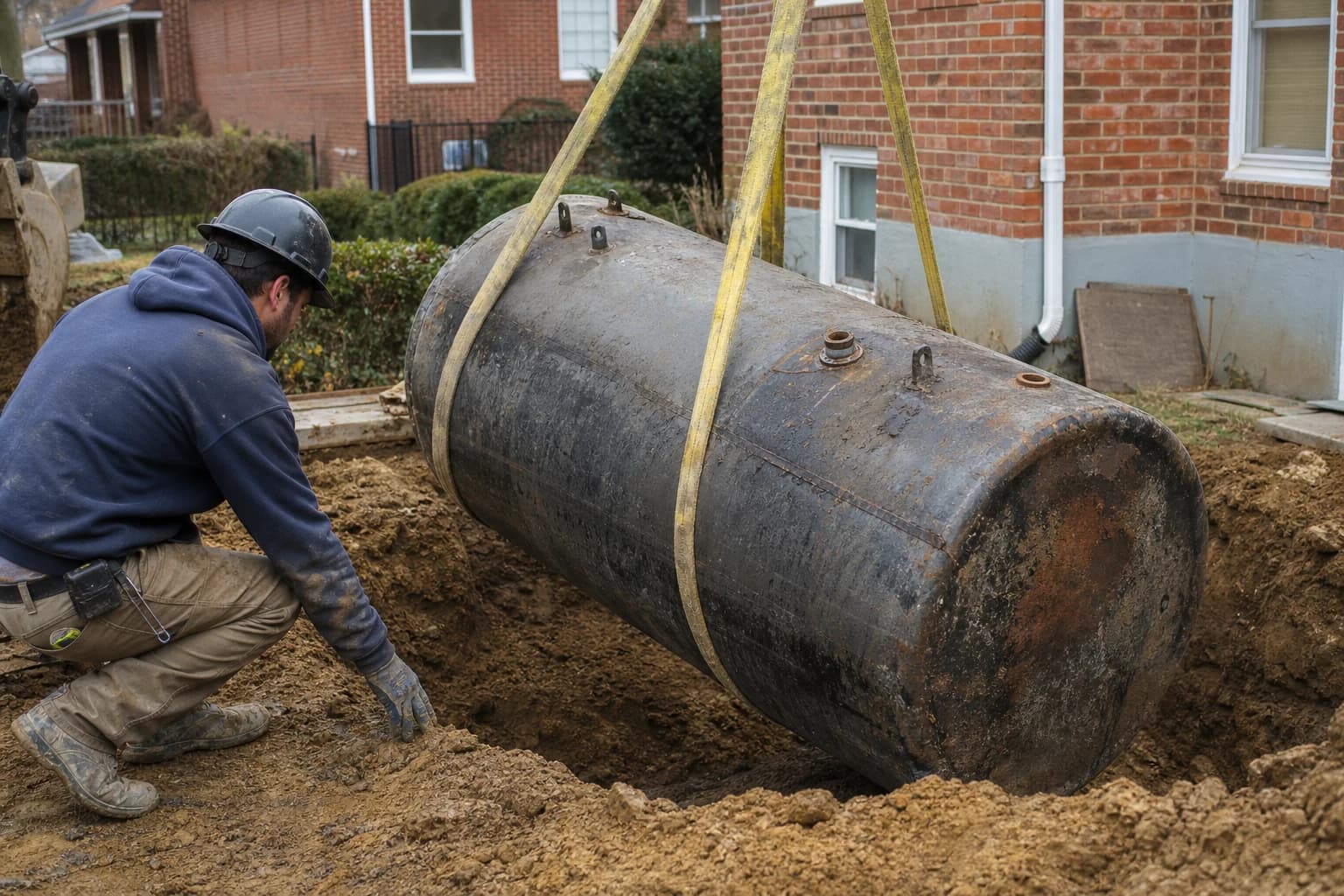
A buried heating oil tank in Baltimore is usually a 275 or 550 gallon steel tank set a few feet down in the side yard or the back garden, with a fill pipe and a vent pipe left in the grass. The tank itself is the simple part of the job. The sequence around it is what decides whether the work stands up to a question five years later.
This page sets out that sequence in the order it actually happens, and names the regulation behind each step so you can check any of it yourself.
The Notice That Goes In Before the Machine Is Booked
COMAR 26.10.10.02 requires the owner or operator to notify MDE at least thirty days before a permanent closure begins, then confirm forty-eight hours in advance of starting. Two separate contacts, and the first one is a month ahead.
Set against that, COMAR 26.10.01.13 requires the closure of a residential heating oil tank to be finished within thirty days of the determination that it is being closed. The two clocks run in opposite directions, and the only way they fit together is to file the notice on the day the decision is made.
In practice that means the first useful thing a Baltimore homeowner can do is not to call for quotes. It is to fix the date of the decision and get the notice in.
COMAR 26.10.10.02 and 26.10.01.13, read 22 August 2026. Facts F7 and F1.
Who Maryland Allows to Remove a Buried Tank
The work has to be performed or supervised by a certified UST system technician or remover. MDE certifies individuals rather than firms, under COMAR 26.10.06 and Environment Article 4-405.
For a house tank the relevant categories are UST System Remover, which covers closure and change-in-service, and Heating Oil Technician, which is limited to heating oil systems of 2,000 gallons or less for consumptive use. A certification lasts two years.
There is a second, separate question, which is whether the contractor can lawfully contract with you at all. The Maryland Home Improvement Commission licenses home improvement work on residential property of one to three dwelling units, and excavating appears on its list. Two different bodies, two different numbers, and it is reasonable to ask for both.
Getting a Machine to a Baltimore Back Yard
Rowhouse blocks with a rear alley are usually workable. Interior lots reached only through the house are not, and that changes the method rather than the price alone.
What Sits Over the Buried Tank
Grass is straightforward. A brick patio, a poured pad or a driveway means a demolition and a reinstatement, and on many Baltimore jobs that surface is the largest single line.
Residual Oil and Sludge in a Buried Tank
The tank and its piping have to be emptied and cleaned of all liquids and accumulated sludge before anything else. Residual product is normal even in a tank abandoned decades ago.
The Soil Directly Under the Tank
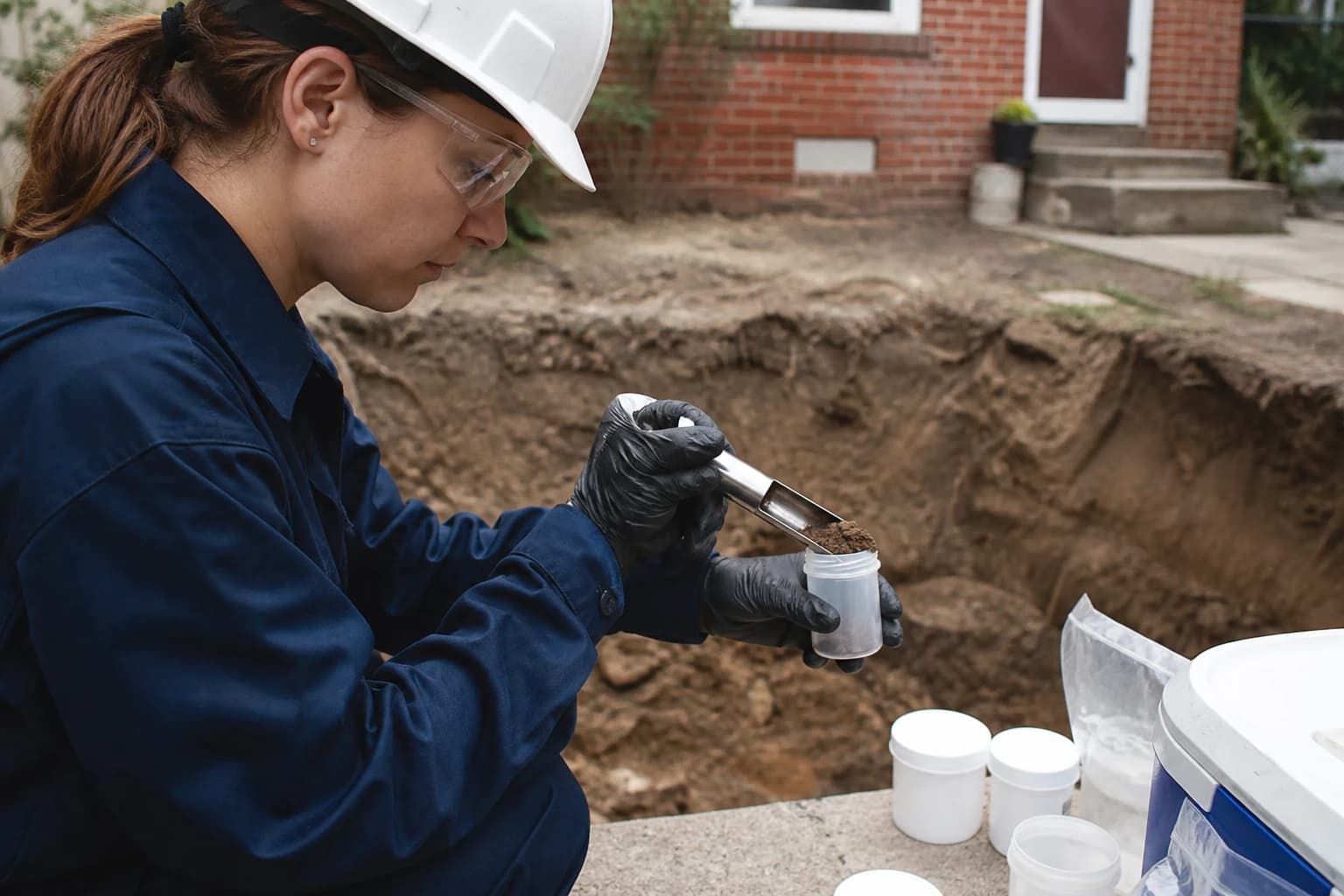
The excavation zone is assessed after the notice and before closure is complete. In Baltimore County a County inspector is present and takes part in that call.
COMAR 26.10.06.01, Maryland OneStop and the Maryland Home Improvement Commission, read 22 August 2026. Facts F11, F12 and F20.
Lifting, Cutting and Disposing of the Tank
Once the tank is empty and clean it is purged of explosive vapors and monitored, then rendered unfit for further use by cutting holes or openings in it. That step matters: a tank that leaves a property intact could in principle be put back into service somewhere else, and the regulation closes that off.
Disposal goes to a Department-approved location. Ask where, and ask for the evidence, because that is one of the documents worth having in the file.
COMAR 26.10.10.02, read 22 August 2026. Fact F8.
Soil Sampling While the Excavation Is Open

The assessment of the excavation zone happens after MDE has been notified and before the closure is complete, which in plain terms means while the hole is still open. Samples taken later, from backfilled ground, answer a different and weaker question.
If the soil is impacted, the job stops being a removal and becomes a corrective action under COMAR 26.10.09, with contaminated soil handled under COMAR 26.10.13. That is a different scope and a different conversation, and any contractor who prices a removal as though contamination cannot happen has moved the risk onto you without saying so.
COMAR 26.10.10.03 and the Subtitle 10 chapter list, read 22 August 2026. Facts F10 and F18.
Underground Oil Tank Removal Cost in Baltimore
There is no partner behind this site and therefore no price of our own. What we will not do is print a Baltimore range we made up.
What is worth asking for instead is an itemized quote, because the gap between two prices for the same buried tank is almost always the sampling line and the reinstatement line rather than the digging.
Buried Tank Questions From Baltimore Owners
- How deep is a buried oil tank in Baltimore usually?
Residential tanks are typically set shallow, with the top a few feet below grade, which is why the fill and vent pipes are short. Depth matters less than what is over the tank and whether a machine can reach it.
- Can I remove a buried oil tank myself in Maryland?
No. COMAR 26.10.10.02 requires the permanent closure of an underground storage tank system to be performed or supervised by a certified UST system technician or remover, and MDE certifies individuals who have passed an examination at 90 percent.
- What happens if the soil under the tank is contaminated?
The job moves from closure into corrective action. Response and corrective action sit under COMAR 26.10.09, and oil-contaminated soil under COMAR 26.10.13. Expect a separate scope, a separate cost and a longer timeline.
- Does Baltimore County send someone to watch the removal?
Yes. The County's Ground Water Management Section issues a permit and an inspector attends on the day, and the inspector and the contractor together determine whether the soil beneath the tank is impacted. Inside Baltimore City there is no equivalent county office.
- What is left in the ground after the tank comes out?
Clean fill, compacted, and whatever surface was there put back. The tank, the piping, the fill pipe and the vent pipe all leave the property.
Ask About a Buried Tank in Baltimore, MD
Tell us roughly where the fill pipe sits, what surface is over the tank, and whether a machine can reach the back of the property. That is usually enough to describe the sequence on your address.
No phone number appears on this site because there is no line to answer it. Everything happens in writing, which also means you keep a copy of what was said.
Send Details of the Buried Tank
Say where the tank sits and whether the address is inside Baltimore City or in Baltimore County. Those two answers decide the whole sequence, and we will set it out for you.