Basement Oil Tank Removal in Baltimore, MD
Getting a tank out of a Baltimore cellar means cutting it down where it stands. The part people miss is that the fill pipe and the vent pipe leave the property with it.
- Tank emptied, cleaned and made vapor free before cutting
- Fill pipe and vent pipe removed, not just capped
- Stairs, floor and route protected through the house
- Second tank outside checked for at the same visit
Tell Us About the Cellar Tank
Say where the tank sits and whether the address is inside Baltimore City or in Baltimore County. Those two answers decide the whole sequence, and we will set it out for you.
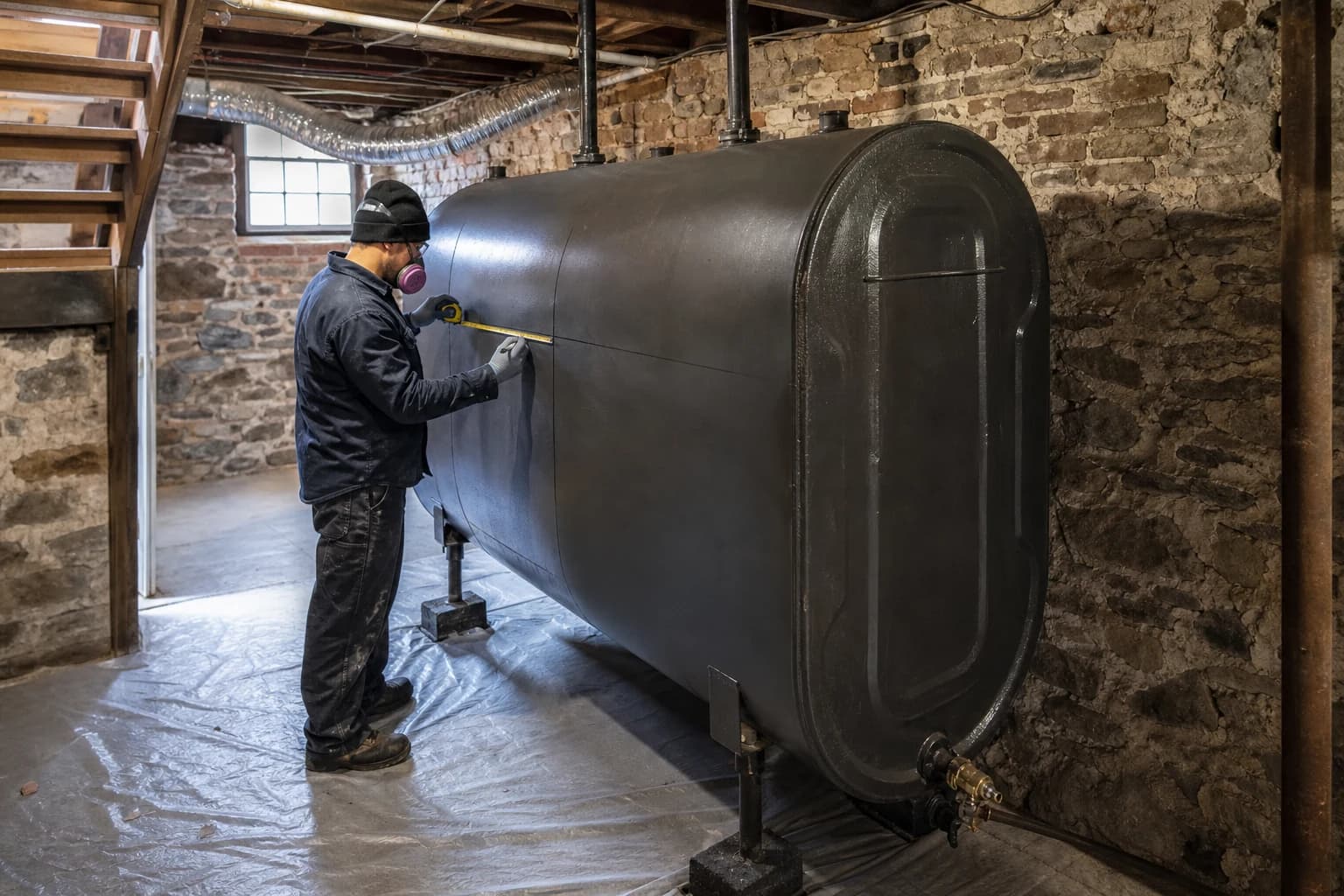
Baltimore has a great many rowhouse cellars with a steel tank still standing on the floor, usually against the party wall, often behind framing that was built around it after the house converted to gas.
An indoor tank is an aboveground tank in Maryland's terms, and that changes which rules apply. It does not mean there are no rules. COMAR 26.10.01.13 says exactly how one is closed, and it asks for more than lifting the tank out.
What Maryland Requires for an Indoor Tank Closure
COMAR 26.10.01.13 sets out the closure of an aboveground or interior residential heating oil tank in three parts. All flammable and combustible liquids come out. They are disposed of under federal, state and local law. And the tank, the piping, the fill pipe and the vent pipe are removed from the property.
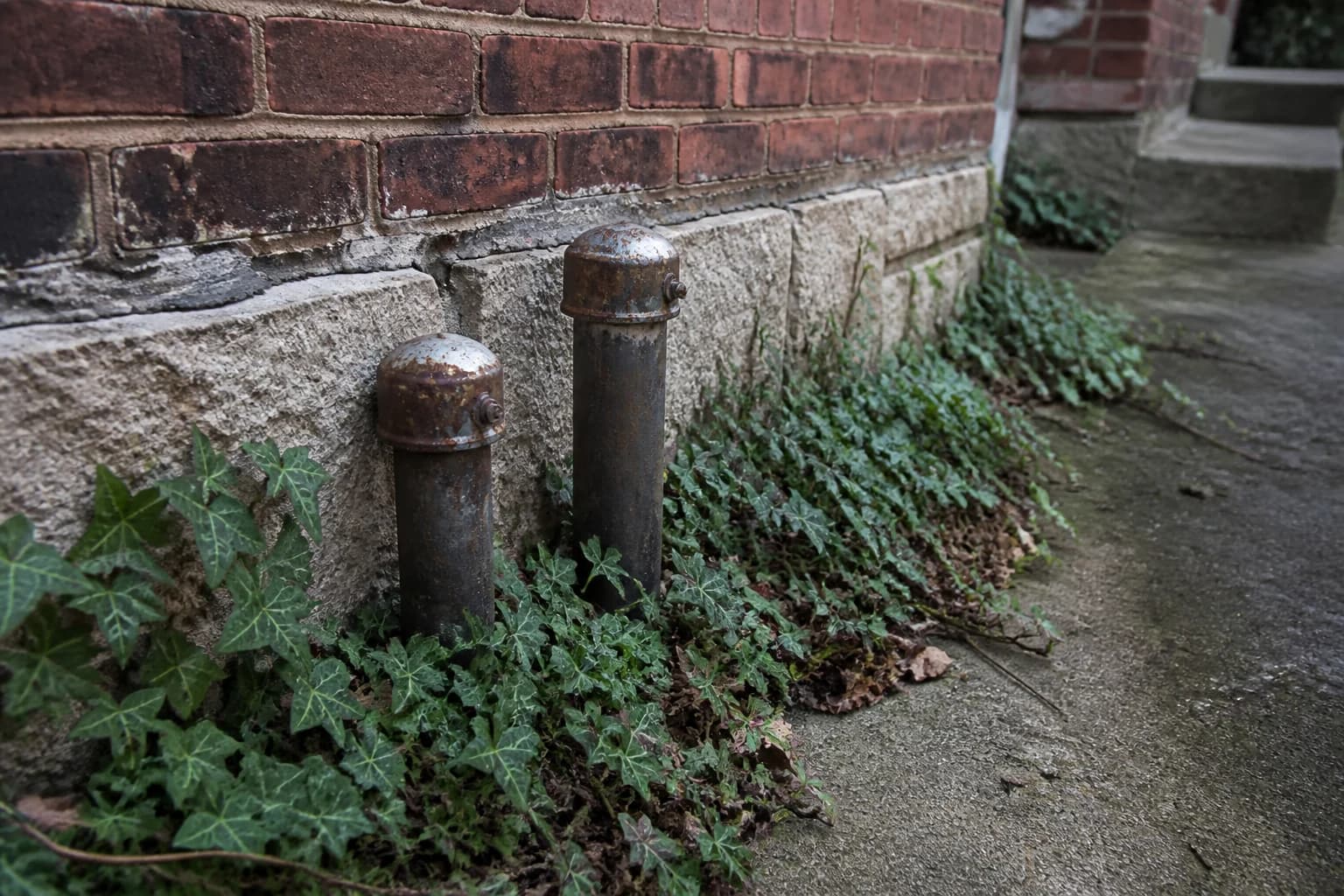
The fill and vent pipes are the part that catches people. A cellar tank can be cut up and carried out while the fill cap stays in the front wall and the vent stays under the eaves, and the job looks finished from inside the house. It is not finished, and those two fittings are exactly what a surveyor notices.
The same thirty day deadline applies. Closure has to be completed within thirty days of the determination that the tank will be permanently closed.
COMAR 26.10.01.13, read 22 August 2026. Facts F1 and F2.
The Certification Question for an Aboveground Tank
MDE's position on a residential heating oil aboveground tank is that a certified UST remover is not required, and that the sensible choice is a contractor familiar with heating oil tanks or oil burning equipment.
Most pages in this market flatten that into a single line saying any tank needs a licensed contractor. It sounds cautious and it is wrong, and it produces the odd situation where a homeowner is told to wait for a certified remover to close a tank standing on their cellar floor.
What does not change is the standard of the work. Emptying, cleaning, cutting and disposal are the same tasks whether or not a certification sits behind them, and the paperwork you want at the end is the same paperwork.
MDE's residential aboveground tank position, read 22 August 2026. The MDE fact sheet itself refuses automated access and is listed as open item U3 on the sources page.
Getting a Tank Out of a Baltimore Rowhouse Cellar
Nothing at 275 gallons is coming up a Baltimore basement stair whole. The tank is emptied, cleaned, vapor-freed and then cut down where it stands, and the sections go out through the stair or the areaway.
The practical work is protecting everything on the route. Cellar stairs in these houses are narrow and often original, the floor is frequently painted concrete that shows every scuff, and the ceiling above is usually the living floor of the house.
Where a rear areaway or a coal chute survives, that is normally the better route, and it is worth checking before anyone quotes on the stair.
Framing Built Around the Cellar Tank
A stud wall or a shelving run put in after the tank stopped being used has to come off first. Worth knowing before the day, because it changes the hours.
Oil Staining Under a Baltimore Cellar Tank
Old seepage into a concrete slab is common and is not the same thing as a release into ground. What matters is whether product has reached soil, and a cracked slab is where that question gets answered.
When a Cellar Tank Points to a Second Tank Outside
Plenty of Baltimore houses ran an indoor tank and, at some earlier point, a buried one. A fill pipe in the front yard that does not line up with the cellar tank is the usual tell, as is a second capped penetration in the foundation wall.
If there is a buried tank as well, the underground rules apply to it in full, including the thirty day advance notice to MDE.
Heating Oil Delivery to a Tank That Is Still in Use
If the cellar tank is still running the house, one rule is worth knowing now rather than later. Heating oil may not be delivered to a tank with a known spill or release, to an unstable tank, or to a tank with no way of determining the level, meaning a functioning vent whistle, a functioning overfill alarm, or somebody confirming there is capacity.
Delivery companies hold an Individual Oil Operations Permit from MDE. A homeowner may deliver to their own tank.
COMAR 26.10.01.13, read 22 August 2026. Fact F5.
Cellar Tank Questions From Baltimore Owners
- Does a basement oil tank have to come out in Maryland?
If it is permanently out of service, yes. COMAR 26.10.01.13 requires the tank, the piping, the fill pipe and the vent pipe to be removed from the property, within thirty days of the determination that it is being closed.
- Can a cellar tank be cut up inside the house?
That is the normal method once the tank has been emptied, cleaned and made vapor free. Nothing at 275 gallons comes up a rowhouse stair intact.
- Do I need an MDE certified remover for a basement tank?
MDE's position is that a certified UST remover is not required for a residential heating oil aboveground tank, and that a contractor familiar with heating oil equipment is the right choice. Underground tanks are the case where certification is required.
- What about the oil stain on the cellar floor?
Staining in a slab is common in these houses and is not automatically a reportable release. The question is whether product has reached soil, which is why a cracked or broken slab changes the answer. If there is a smell of oil or visible product, report it to MDE's Oil Control Program on (410) 537-3442.
- Will removing the cellar tank affect the sale of the house?
It usually helps, and the reason is the paperwork rather than the tank. What a buyer's attorney asks for is evidence the closure happened properly, so keep the disposal evidence and the closure record together.
Ask About a Cellar Tank in Baltimore, MD
Tell us where the tank stands, what the route out looks like, and whether the fill and vent fittings are still in the front wall. Rowhouse access decides most of this job.
No phone number appears on this site because there is no line to answer it. Everything happens in writing, which also means you keep a copy of what was said.
Send Details of the Cellar Tank
Say where the tank sits and whether the address is inside Baltimore City or in Baltimore County. Those two answers decide the whole sequence, and we will set it out for you.