Oil Tank Removal in Maryland
Maryland sets one standard for closing a house heating oil tank and leaves the local process to the county. This is the statewide half, with the section numbers, and where the county half begins.
- COMAR 26.10.01.13 is the section that governs a house tank
- Thirty days to complete a closure, from the decision
- Four MDE certification categories, each with its own limits
- County practice varies, and Baltimore County runs its own
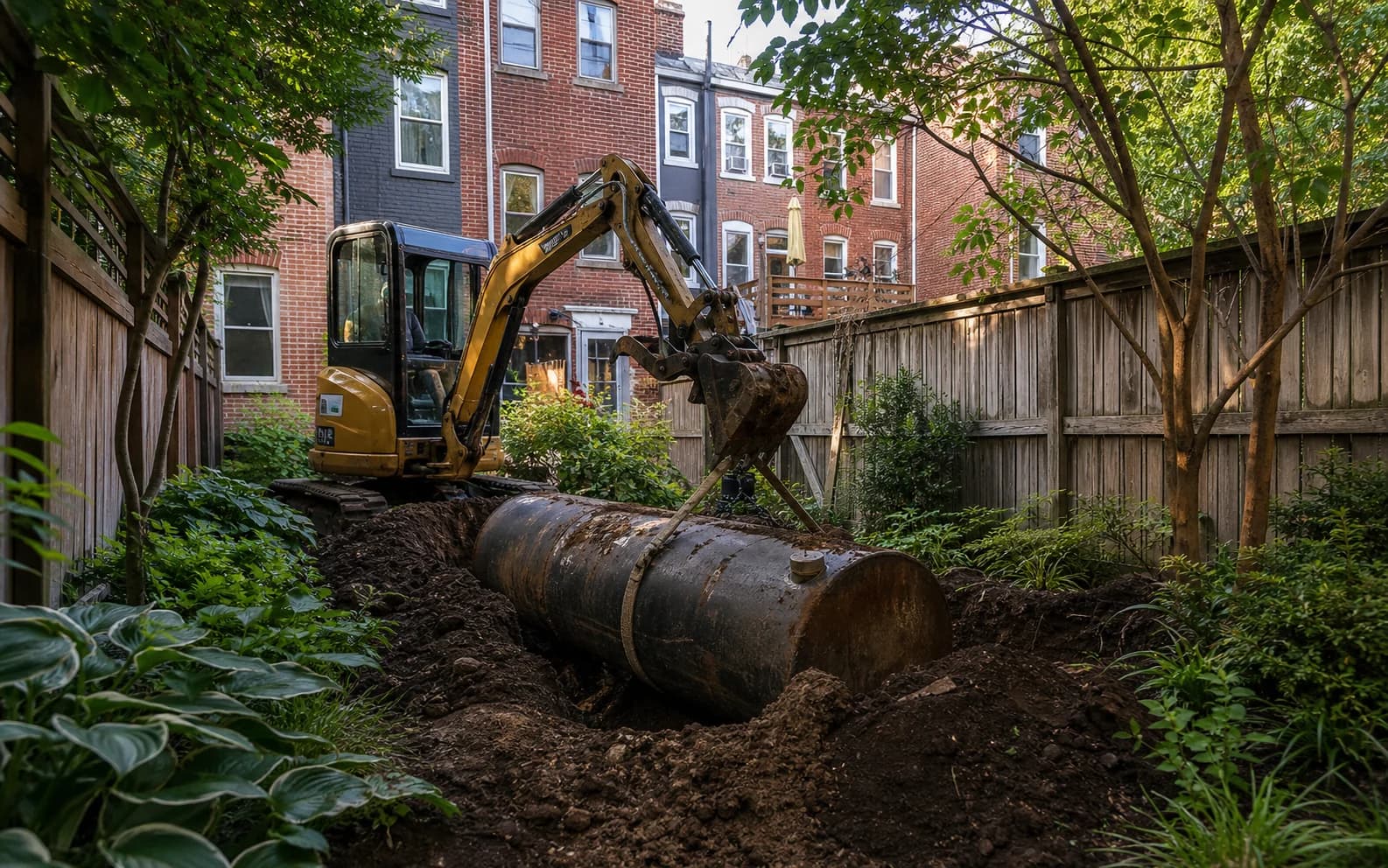
Maryland's rules for a house heating oil tank sit in one place, COMAR Title 26 Subtitle 10, and they are more specific than most homeowners expect. There is a deadline, there is a notice period, and there is a named person who has to do the work.
What varies is local. The state sets the tank rules; the county decides whether anybody from local government turns up. This page covers the statewide half, and says where the county half takes over.
The Rules That Reach a Maryland House Tank
COMAR Title 26 Subtitle 10 runs to eighteen chapters, most of which are about commercial and industrial storage. Eight of them reach a house tank.
Chapter 01 Oil Pollution Control carries .13 Residential Heating Oil Tanks, which is the section to read first. Chapter 06 covers who is certified to do the work. Chapter 08 covers reporting a spill or release, and chapter 09 covers what happens next. Chapter 10 covers out-of-service systems and closure. Chapter 13 covers oil-contaminated soil. Chapter 14 is the residential reimbursement program, now closed to new applications. Chapter 17 covers shop-fabricated aboveground storage tanks.
COMAR Title 26 Subtitle 10 chapter list, read 22 August 2026. Fact F18.
The Two Deadlines Every Maryland Closure Runs On
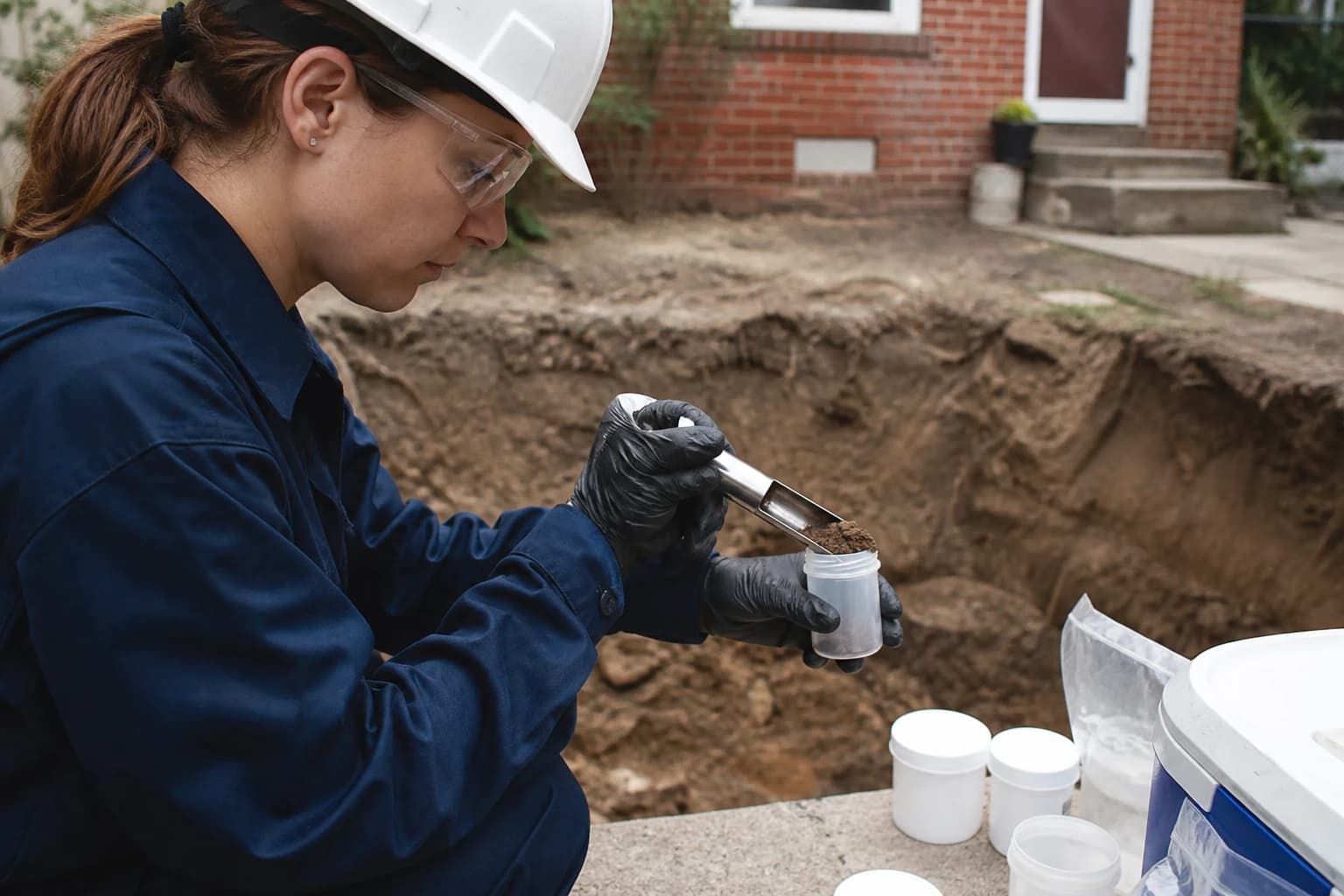
Permanent closure of a residential heating oil tank has to be completed within thirty days of the determination that it will be permanently closed. That is COMAR 26.10.01.13, and the clock starts at the decision.
For an underground system, COMAR 26.10.10.02 wants notice to MDE at least thirty days before the closure begins, and a confirmation forty-eight hours ahead.
Put together, a homeowner who decides in March and books a contractor for June has a paperwork problem that no amount of good site work fixes afterward. File the notice at the decision.
COMAR 26.10.01.13 and 26.10.10.02, read 22 August 2026. Facts F1 and F7.
Maryland's Four UST Certification Categories
Under COMAR 26.10.06 and Environment Article 4-405, MDE certifies individuals in four categories, and an individual may only perform the work their certification covers.
UST System Technician installs, upgrades, repairs, closes and changes systems in service. Heating Oil Technician is the same work restricted to heating oil systems of 2,000 gallons or less for consumptive use, which describes essentially every residential tank in the state. UST System Remover does closure and change-in-service only. UST System Inspector inspects.
The examination pass mark is 90 percent, certifications expire two years from issuance, and renewal requires recent approved training plus evidence of six UST sites for a technician or remover, or ten inspection sites for an inspector, or a retest. Asking which category somebody holds and when it expires is a reasonable question and a quick one.
COMAR 26.10.06.01 and Maryland OneStop, read 22 August 2026. Facts F11 and F12.
Where the County Takes Over From the State

Maryland does not run one process. Baltimore County operates a Ground Water Management Section that issues its own permit for residential underground storage tank removal and sends an inspector to the job, and it keeps per-property records of past removals that it will release on request.
Baltimore City has no county-level groundwater office. The tank rules come from MDE directly, and the City's involvement runs through the housing department's permit counter.
Other Maryland counties sit somewhere between those two, and the honest answer is that we have verified the two Baltimores and have not verified the rest. Anything a contractor tells you about a Montgomery or Anne Arundel process should be checked with that county rather than taken from a page like this one.
Baltimore County Ground Water Management and Baltimore City DHCD, read 22 August 2026. Facts F23 and F24.
Maryland's Tank Rules Now Carry Federal Approval
EPA gave final approval to Maryland's underground storage tank program revisions under docket EPA-R03-UST-2025-0091, effective 10 November 2025, codifying and incorporating by reference COMAR 26.10 chapters 03, 04, 05, 07, 08, 09, 10, 11, 12 and 16.
For a homeowner this changes nothing operationally, and EPA said as much: the action "merely approves the existing State regulations as meeting the Federal requirements" and imposes no additional requirements on the regulated community. MDE keeps primary enforcement and EPA keeps concurrent authority.
It is worth knowing because it dates the current rules. Anything written about Maryland tanks before June 2022, when the subtitle was rewritten, is describing a different regime.
Federal Register document 2025-17519, 11 September 2025, read 22 August 2026. Fact F19.
What Maryland No Longer Offers
The Residential Heating Oil Tank System Site Rehabilitation Reimbursement Program is closed to new applications. Environment Article 4-705(b)(2) allowed residential owners to apply only until 30 June 2024.
A large amount of the Maryland tank advice online was written while it was open and still reads as though a homeowner can claim.
Md. Code, Environment 4-705(b), read 22 August 2026. Fact F14.
Maryland Oil Tank Removal Questions
- Is it against the law to leave an old oil tank in the ground in Maryland?
A tank taken permanently out of service has to be permanently closed, and COMAR 26.10.01.13 puts a thirty day limit on completing that. Leaving it in the ground is only lawful as an abandonment in place that MDE has approved, on a professional engineer's report.
- Who regulates heating oil tanks in Maryland?
The Maryland Department of the Environment, through its Oil Control Program at 1800 Washington Boulevard in Baltimore, on (410) 537-3442. It is MDE, not DEP.
- Does Maryland require a permit to remove a residential oil tank?
MDE requires notification rather than a permit for the tank itself. Whether a local permit is needed depends on the county. Baltimore County requires one and sends an inspector; Baltimore City publishes no removal-specific permit type, which we list as an open question rather than answering it with a guess.
- How big does a tank have to be before Maryland's rules apply?
COMAR 26.10.01.13 covers residential heating oil tanks without a gallon floor. The 2,000 gallon figure that appears in the rules is the ceiling on the Heating Oil Technician certification category, not a threshold below which the rules stop.
- What is the difference between closure and removal in Maryland's wording?
Closure is the outcome the regulation requires. Removal is the usual way of achieving it. The alternative, abandonment in place, is also a permanent closure but needs MDE's approval first.
Check How the Maryland Rules Reach Your Tank
Tell us the county, the tank location and whether it is above or below ground. Those three answers settle which sections apply and who has to be notified.
No phone number appears on this site because there is no line to answer it. Everything happens in writing, which also means you keep a copy of what was said.
Send Details of a Maryland Tank
Say where the tank sits and whether the address is inside Baltimore City or in Baltimore County. Those two answers decide the whole sequence, and we will set it out for you.