Maryland Oil Tank Removal Reimbursement
Maryland's residential heating oil tank reimbursement closed to new applications on 30 June 2024. Here is the statutory wording that closed it, what it paid before then, and why the regulation still reads as though it is open.
- Closed by Environment Article 4-705(b)(2) on 30 June 2024
- Paid site rehabilitation, never a clean tank removal
- $500 deductible, ceilings tiered by property value
- COMAR 26.10.14 survives it, which is what misleads people
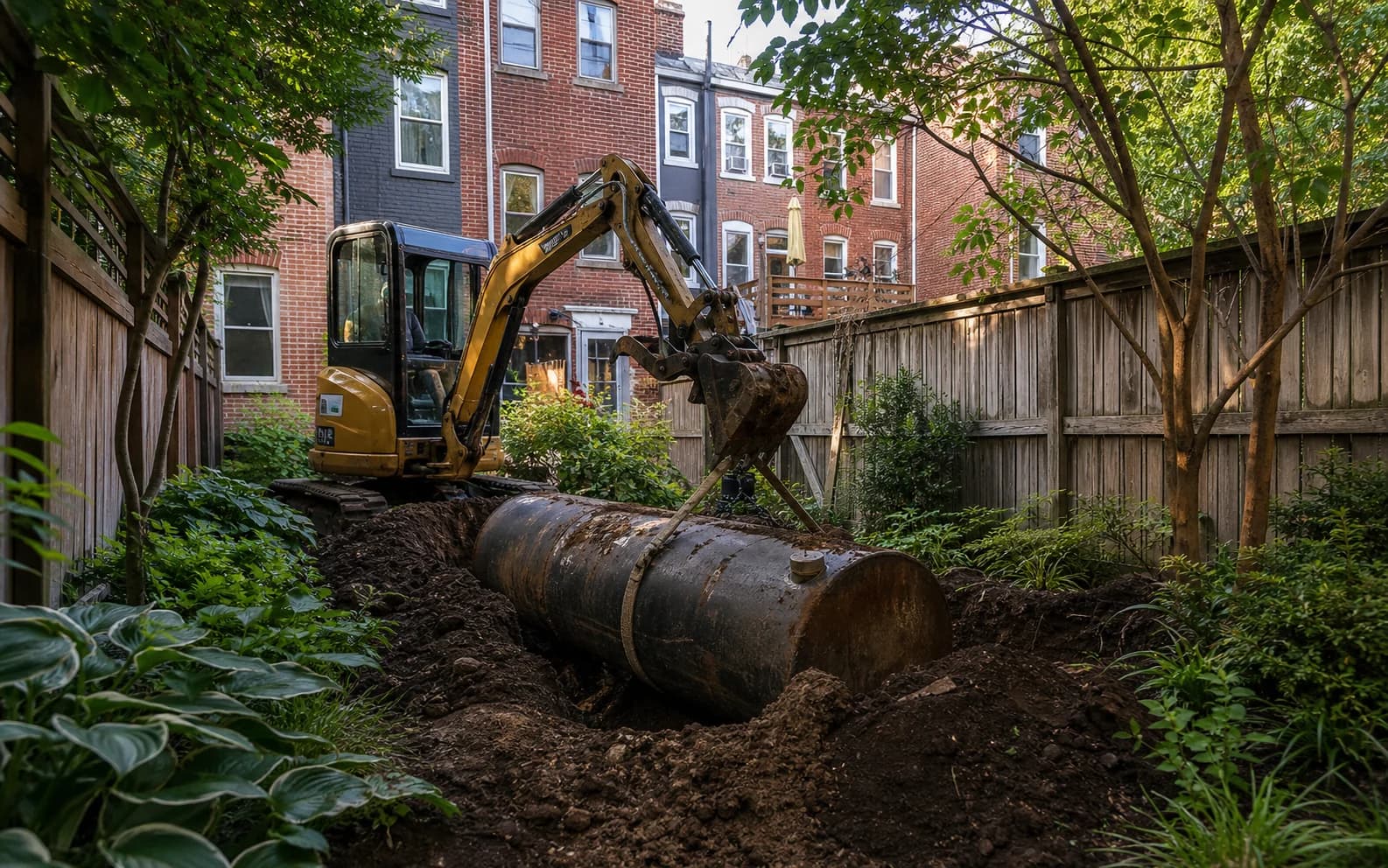
The short answer is that there is no reimbursement to apply for. Maryland's residential heating oil tank cleanup reimbursement window closed on 30 June 2024, and nothing has replaced it.
That answer is worth more than it looks, because a great deal of the Maryland tank advice online was written while the program was open and has never been updated. If you are budgeting a Baltimore tank job around a figure you read somewhere, this page explains where that figure came from and why it is no longer available.
The Statutory Wording That Closed the Window
Environment Article 4-705(b)(2) reads: "Until June 30, 2024, the residential owner of a heating oil tank eligible under 4-704(b)(1)(iii) of this subtitle may apply to the Fund for reimbursement not later than 6 months after the completion of rehabilitation for usual, customary, and reasonable costs incurred on or after October 1, 2000, in performing the site rehabilitation."
Two dates in one sentence, and they get confused. 1 October 2000 is the earliest date a cost could have been incurred. 30 June 2024 is the last date an application could be made. The six month rule sits between them: an application had to arrive within six months of the rehabilitation finishing.
The equivalent non-residential window in 4-705(b)(1) had already closed on 30 June 2021.
Md. Code, Environment 4-705(b), read 22 August 2026. Fact F14.
Why the Regulation Still Reads as Though the Program Is Open
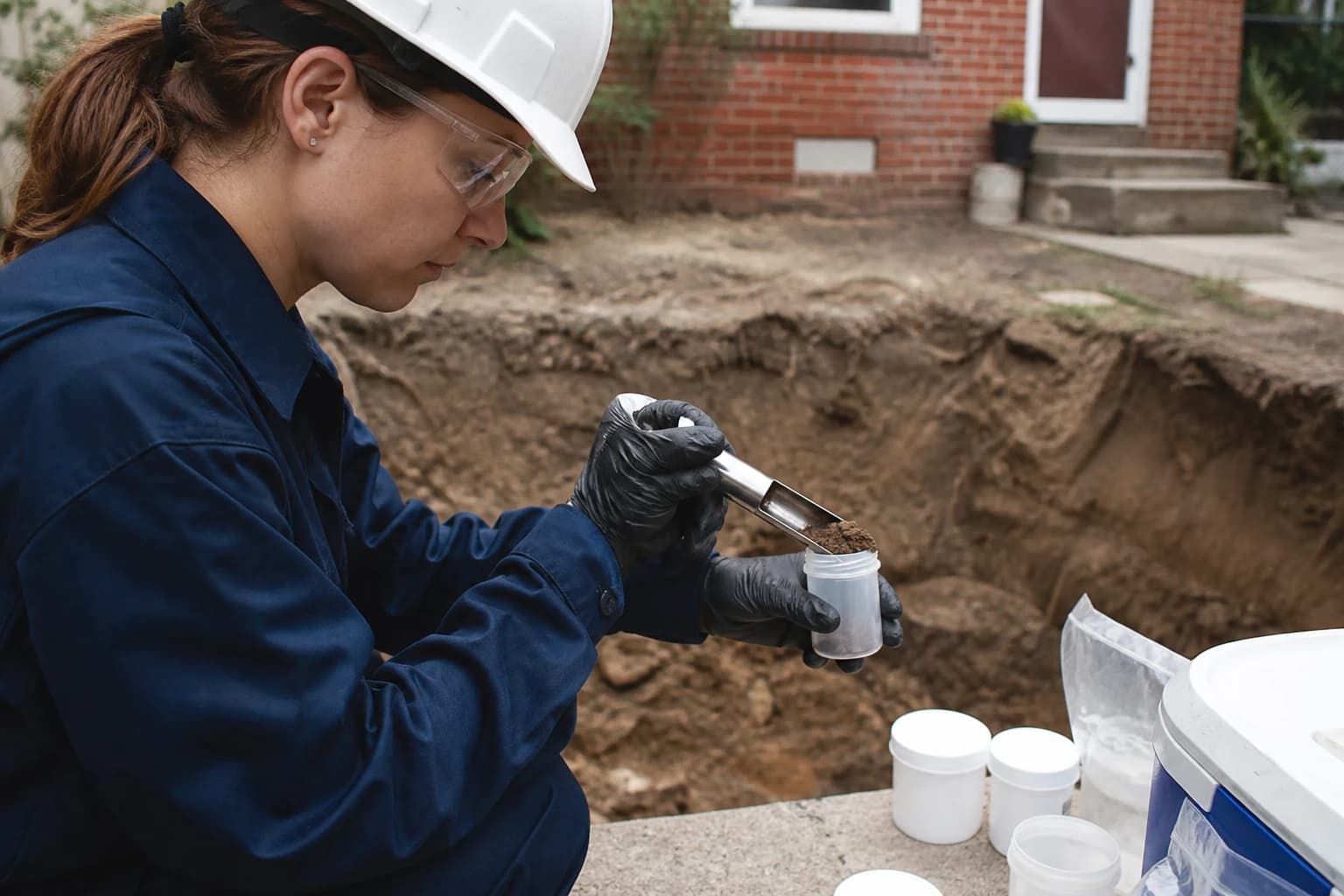
COMAR 26.10.14, the Residential Heating Oil Tank System Site Rehabilitation Reimbursement Program, is still there. All ten sections of it. Somebody searching the regulations finds a live chapter describing an application process, and reasonably concludes there is one.
The chapter does not carry the deadline itself. COMAR 26.10.14.06 says an application is submitted "until the date established by Environment Article, 4-705(b)", which defers the closing date to the statute rather than printing it. So the regulation stays accurate and the program stays shut, and only somebody who follows the cross-reference finds that out.
This is the single most common error in Maryland tank content, and it is an honest one. The rule and the deadline live in two different books.
COMAR 26.10.14.01 and 26.10.14.06, read 22 August 2026. Facts F15 and F17.
What the Program Paid While It Was Open
Worth knowing, because it tells you how much of a gap the closure leaves. COMAR 26.10.14.08 set a $500 deductible per occurrence.
Before 1 July 2022 reimbursement could not exceed $20,000 per occurrence. After that date the ceiling was tiered by the value of the property: up to $20,000 and 100 percent of eligible costs where the property was at or under $300,000; up to $10,000 and 50 percent above $300,000 and up to $600,000; and up to $5,000 and 25 percent above $600,000. Each of those was then reduced by the deductible.
That tiering is why applications from 1 July 2022 onward had to carry a State Department of Assessments and Taxation property database search or the most recent property tax assessment notice. The property's assessed value decided the ceiling.
What the Program Never Covered
The scope was site rehabilitation, meaning cleanup of contamination. A clean tank removal with no release was not a rehabilitation cost, so a straightforward Baltimore removal would not have drawn on it even while it was open.
What the Regulation Said About Entitlement
COMAR 26.10.14.01 stated plainly that the chapter may not be construed as entitling a residential owner to reimbursement. It was a fund with allocations, not a guarantee.
COMAR 26.10.14.08 and 26.10.14.06, read 22 August 2026. Facts F16 and F15.
How to Read Maryland Tank Advice Written Before 2024
The tell is a page that mentions a $20,000 ceiling or a $500 deductible in the present tense. Both figures were correct once. Neither is available now.
The second tell is a page urging you to act before you lose the money. That framing dates a page to the run-up to the deadline, and pages carrying it are now two years stale regardless of what date sits at the top.
A third tell, less obvious, is a page that quotes COMAR 26.10.14 accurately and concludes the program is running. That is the cross-reference problem above, and it catches careful writers as well as careless ones.
What a Maryland Homeowner Has Left
Homeowner insurance, and it is worth reading the policy rather than assuming. Heating oil releases are commonly excluded, and some insurers will not bind at all with an underground tank in place, which is its own reason to close one.
A negotiated credit at sale, which in practice is where most Baltimore tank costs actually land. A buyer discovering a tank late is a worse outcome than a seller pricing it in early.
And the obligation itself does not soften because the fund closed. The thirty day closure deadline in COMAR 26.10.01.13 applies whether or not anyone is helping with the cost.
If You Completed Work Before the Deadline
The statute allowed an application within six months of the rehabilitation finishing, so work completed close to the cut-off had a tail. Anyone who filed a complete application by the deadline could still be paid afterward.
If that describes you and you are unsure what happened to a claim, the program's number of record is (410) 537-3676, or (800) 633-6101 extension 3676, at 1800 Washington Boulevard, Baltimore. We are not in a position to check a claim on anyone's behalf and would not pretend otherwise.
Program contact as published by MDE. MDE's own pages refuse automated access, so this number is listed as needing a human check on the sources page.
Maryland Reimbursement Questions
- Can I still apply for Maryland oil tank removal reimbursement?
No. Environment Article 4-705(b)(2) allowed residential owners to apply until 30 June 2024, and no replacement program has been created.
- How much did the Maryland reimbursement program pay?
There was a $500 deductible per occurrence. Before 1 July 2022 the ceiling was $20,000 per occurrence. After that it was tiered by property value: up to $20,000 at or under $300,000, up to $10,000 above that and up to $600,000, and up to $5,000 above $600,000.
- Why does COMAR 26.10.14 still exist if the program is closed?
Because the closing date sits in the statute rather than the regulation. COMAR 26.10.14.06 defers to the date established by Environment Article 4-705(b), so the chapter reads as live while the window it points at has shut.
- Did the reimbursement cover a normal tank removal?
No. It covered site rehabilitation, which means cleanup after a release. A clean removal with no contamination was never an eligible cost.
- Is there any other Maryland grant for removing an oil tank?
None that we have been able to verify. If you find one, check its authorizing statute for a sunset date before relying on it, because that is exactly what caught this program's readers.
- Does my insurance cover an oil tank leak in Maryland?
Read the policy. Heating oil releases are commonly excluded from homeowner cover, and some insurers decline to write at all where an underground tank is present. That is a question for your insurer rather than for a contractor.
Ask What Applies Now the Fund Has Closed
If you are working out what a tank job costs you without the reimbursement behind it, tell us what is on the property and we will set out what the work involves and where the money goes.
No phone number appears on this site because there is no line to answer it. Everything happens in writing, which also means you keep a copy of what was said.
Send Details of the Tank Work
Say where the tank sits and whether the address is inside Baltimore City or in Baltimore County. Those two answers decide the whole sequence, and we will set it out for you.