Oil Tank Abandonment in Place in Baltimore, MD
Maryland lets a buried tank stay in the ground, filled solid, but only where MDE approves it and only on a professional engineer's report showing that digging it out would damage something that has to stay up.
- MDE approval sought before the method is settled
- Engineer's report names the structure at risk
- Tank emptied and cleaned exactly as for a removal
- Filled with inert flowable material, no voids left
Tell Us Why the Tank Cannot Come Out
Say where the tank sits and whether the address is inside Baltimore City or in Baltimore County. Those two answers decide the whole sequence, and we will set it out for you.
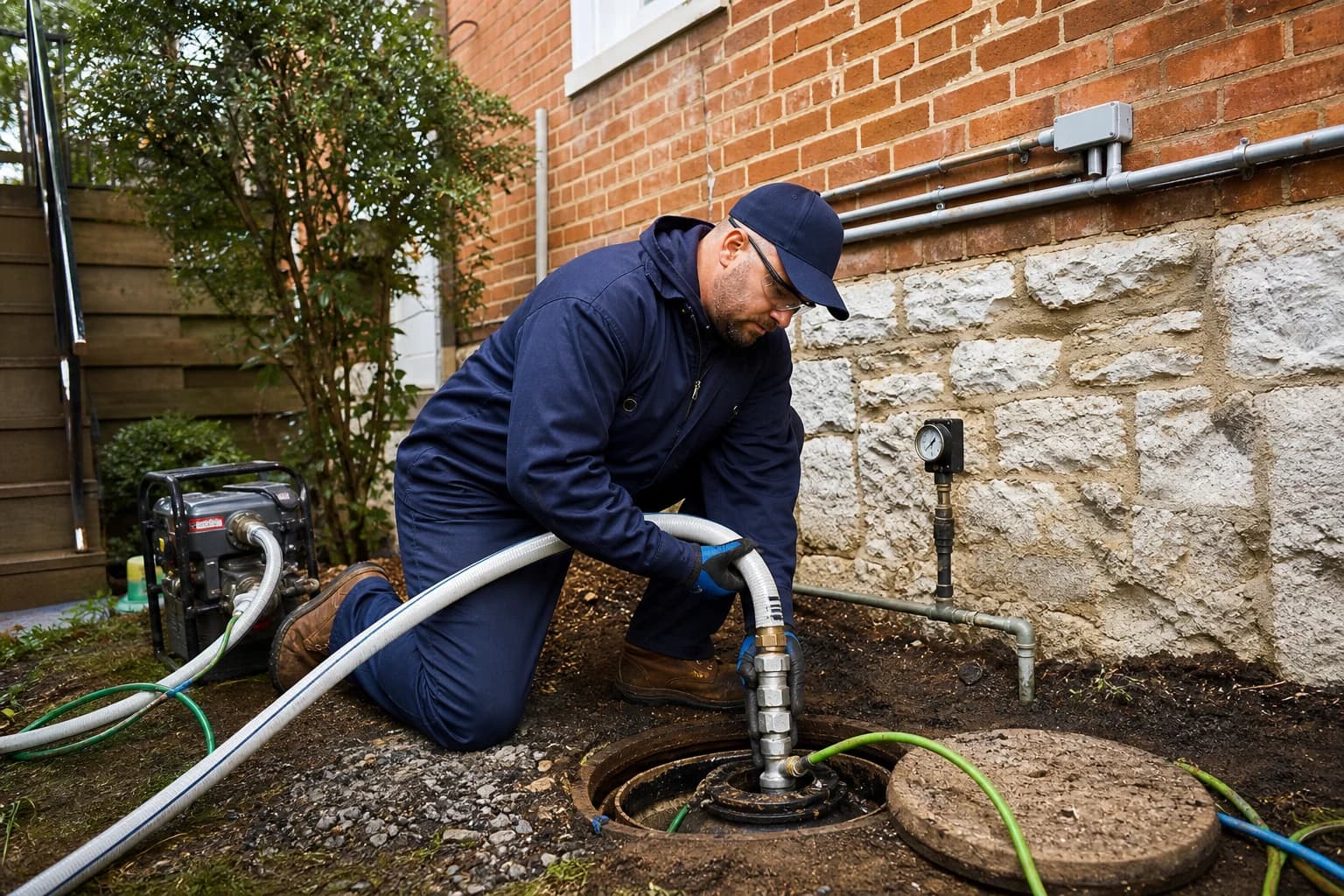
Abandonment in place means the tank stays where it is, filled solid, instead of being lifted out. On a Baltimore rowhouse block it is a real question, because tanks were sometimes set tight against a footing, under a party wall or over a utility run, and excavating them would take something out that has to stay in.
Maryland allows it. It allows it on narrower terms than most people are told, and the terms are worth reading before anyone quotes for it.
What COMAR 26.10.10.02 Requires Before a Tank Can Be Left
The regulation gives two routes for permanent closure. Remove the tank, or abandon it in place if the Department approves.
Approval is not a formality and it is not the contractor's call. It rests on a report signed by a professional engineer demonstrating that removing the tank would harm nearby structures or utilities. The test is about damage to something else, not about cost, access or convenience.
If approval is given, the tank is filled completely with a solid, inert and flowable material so that there are no voids. Everything that applies to a removal still applies first: the tank and piping are emptied and cleaned of all liquids and accumulated sludge, and the site assessment still happens.
COMAR 26.10.10.02, read 22 August 2026. Facts F9 and F8.
The Cases Where Abandonment Is Genuinely the Answer
The pattern that comes up in Baltimore is a tank set against or partly under a rowhouse foundation, in a block where the wall it sits against is shared. Excavating to the tank means undermining a footing that carries two houses.
The second pattern is a tank sitting over or beside a utility run in a narrow rear yard, where the excavation would expose a service the utility will not allow to be dug out.
In both cases the engineer's report is describing a specific structure or service and a specific consequence. A report that says the job would be difficult is not the same document.
Abandonment Against Removal on Cost
Filling a tank is not automatically cheaper than lifting it. The engineer's report, the fill material and the approval process all carry their own cost, and the removal that was avoided is still a question at sale.
What a Buyer Makes of an Abandoned Tank
A properly approved and documented abandonment is a defensible position. An undocumented one reads as a tank of unknown condition under the house, and that is a very different conversation at settlement.
Why Inert Flowable Fill Is Specified and Sand Is Not
The wording is a solid, inert and flowable material, filled completely so there are no voids. Each of those words is doing work.
Flowable is how the material reaches the ends of a cylinder through a small opening. Inert is so it does not react with residual product. Complete, with no voids, is so the tank cannot collapse later and take the ground above it down with it.
Loose sand poured through a hatch satisfies none of that reliably, which is why the specification is written the way it is.
COMAR 26.10.10.02, read 22 August 2026. Fact F9.
Temporary Closure Is a Different Thing Entirely
COMAR 26.10.10.01 covers temporary closure, which is a tank taken out of service but not permanently closed. It is not a way of leaving a tank indefinitely, and it is not the same as abandonment in place.
For a residential heating oil tank, the moment the determination is made that the tank is permanently closed, the thirty day deadline in COMAR 26.10.01.13 starts. Sitting in temporary closure while deciding is a real state, but it is not a permanent answer and it does not produce a closure record.
COMAR 26.10.10.01 and 26.10.01.13, read 22 August 2026. Facts F10 and F1.
What Happens if MDE Does Not Approve
Then the tank comes out, and the work goes back to a standard underground tank removal with whatever structural protection the site needs.
That is worth planning for from the beginning rather than treating as a setback. The proportion of Baltimore tanks that genuinely cannot be excavated is small, and most of the ones people expect to be abandoned turn out to be removable.
Abandonment Questions From Baltimore Owners
- Can I just fill my old oil tank with sand and leave it?
No. Abandonment in place requires MDE approval, and approval rests on a professional engineer's report showing that removal would harm nearby structures or utilities. If it is approved, the fill has to be a solid, inert, flowable material placed so there are no voids.
- Who signs the report for an abandonment in place?
A professional engineer. COMAR 26.10.10.02 names the signature specifically, and it is not something a removal contractor can supply on their own account.
- Is abandoning a tank cheaper than removing it in Baltimore?
Not reliably. The engineer's report and the fill material carry their own cost, and the approval step adds time. The case for abandonment is structural, not financial.
- Does an abandoned tank still need soil sampling?
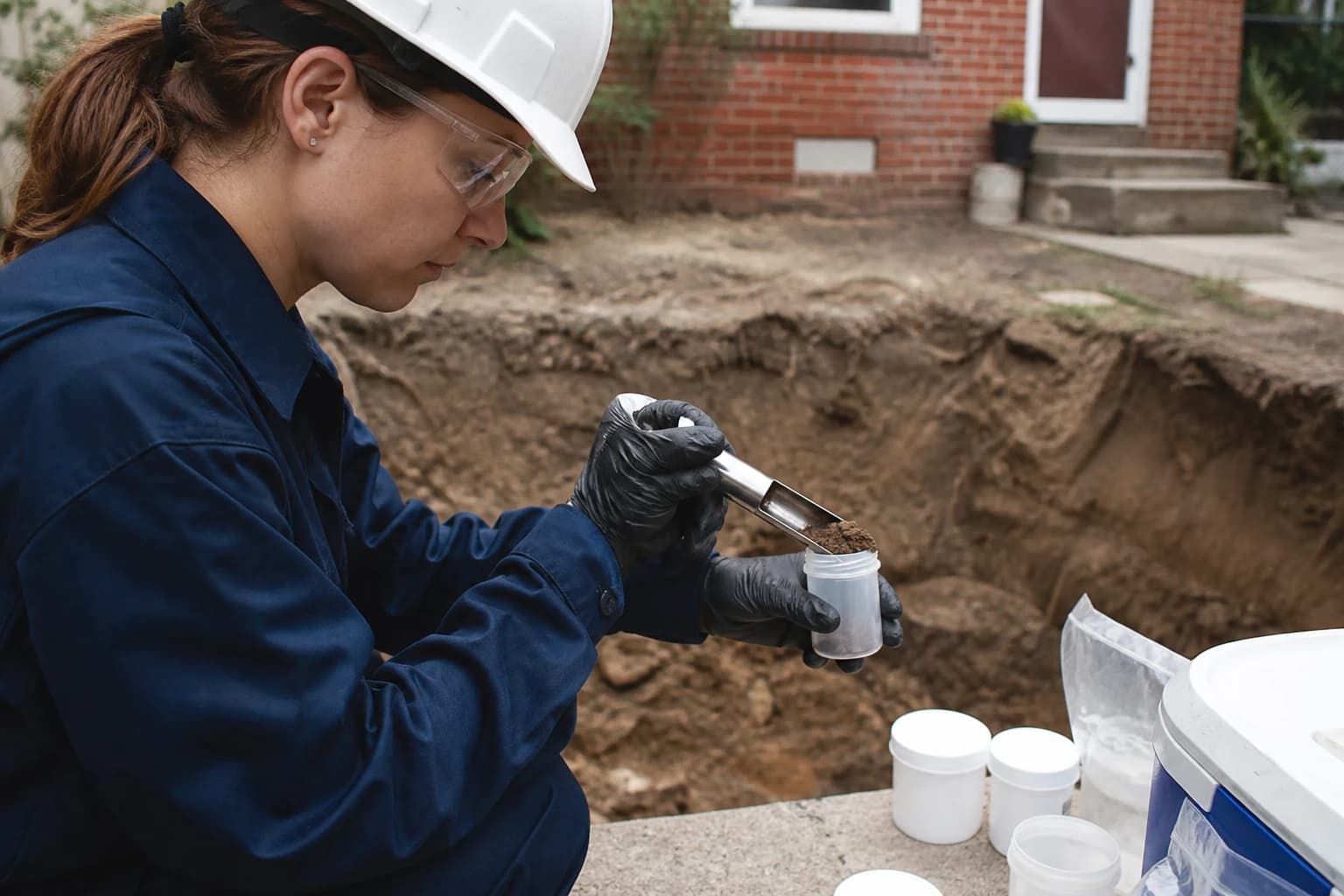
The site assessment requirement does not disappear because the tank stays. The excavation zone assessment under COMAR 26.10.10.03 is part of permanent closure, and closure records under 26.10.10.05 apply either way.
- Will a lender accept a tank abandoned in place?
That is between you and the lender, and it turns on the documentation rather than the method. An approved abandonment with the engineer's report and the closure record behind it is a position you can evidence. An undocumented one is not.
Ask Whether a Baltimore Tank Can Be Left in Place
Tell us what the tank sits under or against, and how close it is to a foundation, a party wall or a service run. That is the question MDE will be asked, so it is the one worth answering first.
No phone number appears on this site because there is no line to answer it. Everything happens in writing, which also means you keep a copy of what was said.
Send Details for an Abandonment Check
Say where the tank sits and whether the address is inside Baltimore City or in Baltimore County. Those two answers decide the whole sequence, and we will set it out for you.