Maryland Oil Tank Regulations for Homeowners
COMAR Title 26 Subtitle 10 runs to eighteen chapters and eight of them reach a house tank. This is those eight, by number, in the order a Baltimore homeowner meets them.
- Every claim cites a section you can open yourself
- The thirty day deadline and the two notice periods
- What Maryland adopted on 13 June 2022 and what EPA approved
- Four widely repeated claims that the text does not support
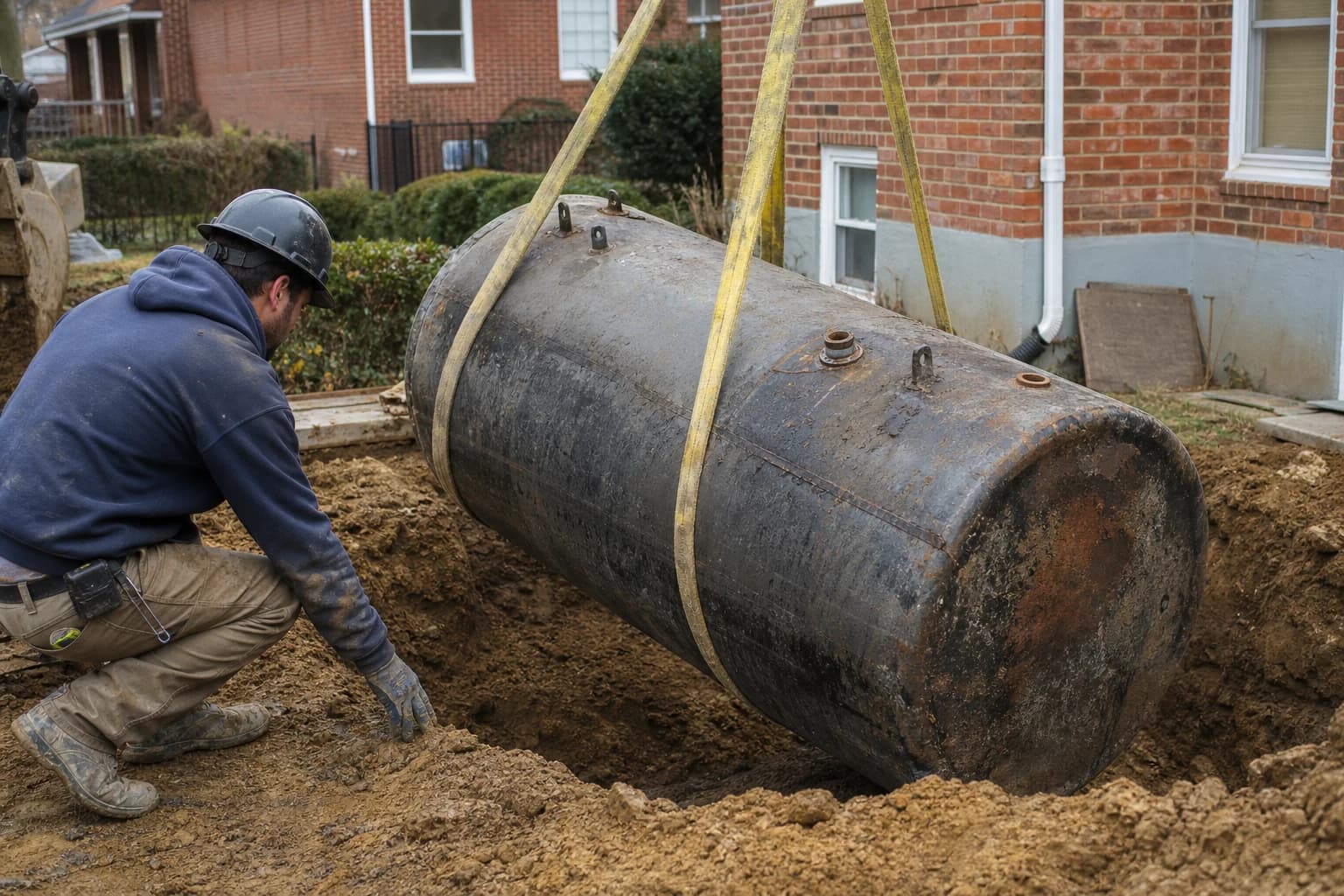
Maryland's oil tank rules are not hidden and they are not vague. They sit in COMAR Title 26 Subtitle 10, they are published in full on the state's own regulation library, and the sections that reach a house tank can be read in an afternoon.
This page goes through them by number, in the order a homeowner meets them, and finishes with four corrections, because parts of what circulates about Maryland tank law fall apart against the wording itself.
COMAR 26.10.01.13, the Section to Read First
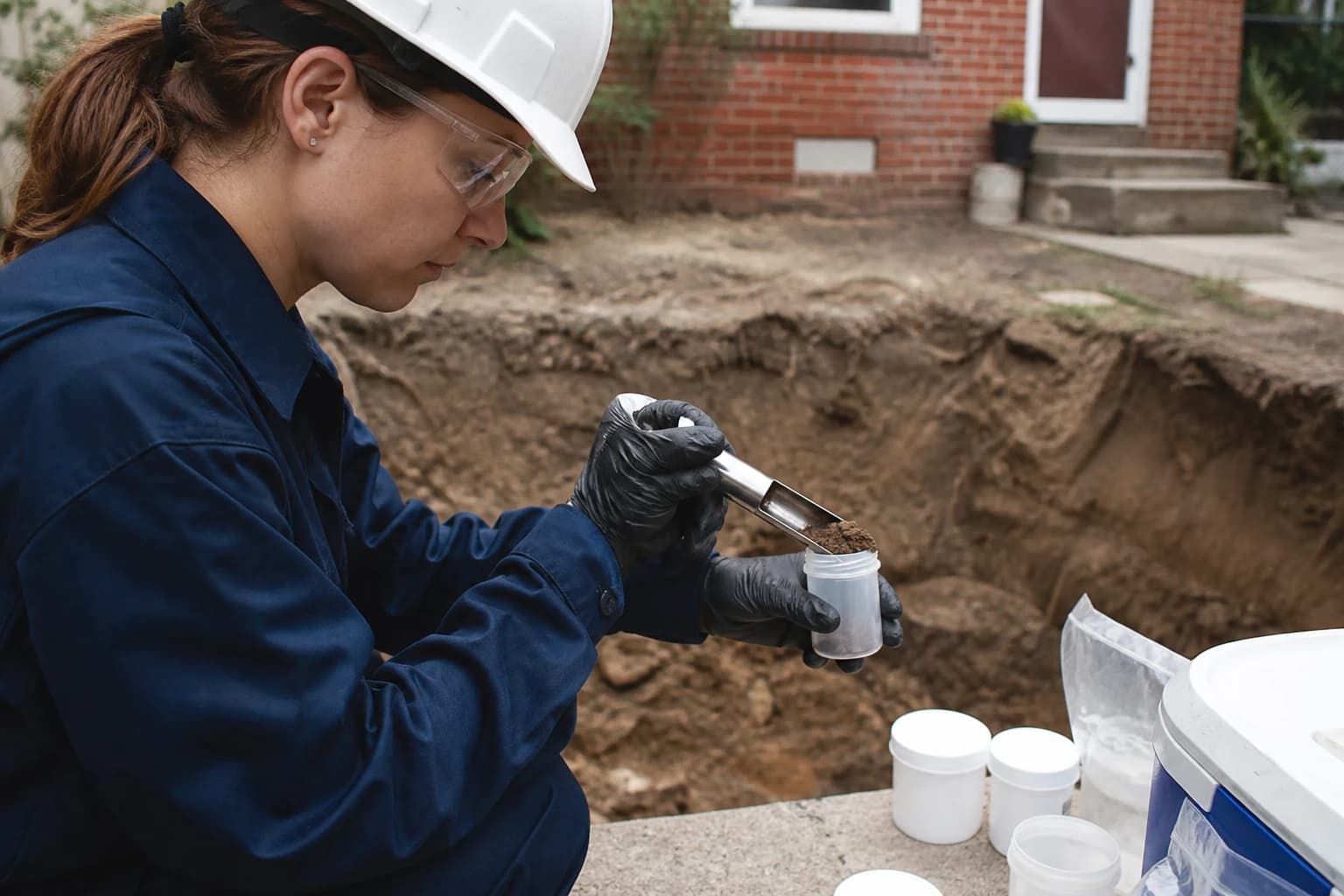
Residential Heating Oil Tanks. It covers delivery of heating oil to a residential tank, the use of the tank, installation, and permanent closure. Almost everything a homeowner needs is in this one section.
On closure it sets the deadline: permanent closure completed within thirty days of the determination that the tank will be permanently closed.
On an aboveground or interior tank it sets the method: remove all flammable and combustible liquids, dispose of them under federal, state and local law, and remove the tank, the piping, the fill pipe and the vent pipe from the property. For an underground tank it hands off to COMAR 26.10.10.
COMAR 26.10.01.13, read 22 August 2026. Facts F1 and F2.
COMAR 26.10.10, Closure of an Underground System
Five sections, and three of them matter to a house tank.
26.10.10.02 Permanent Closure and Changes-in-Service
Notice to MDE at least thirty days before beginning, and confirmation forty-eight hours ahead. Work performed or supervised by a certified UST system technician or remover. Tank and piping emptied and cleaned of liquids and sludge. A tank being removed is purged of vapors, monitored, rendered unfit by cutting openings, and disposed of at a Department-approved location.
26.10.10.03 Assessing the Site at Closure
The excavation zone is assessed after MDE has been notified and before the closure is complete, which in practice means while the hole is open.
26.10.10.05 Closure Records
The records requirement. This is the section behind the document a buyer's attorney asks for years later, and it is the reason the paperwork is the deliverable rather than the hole.
26.10.10.01 Temporary Closure
A tank out of service but not permanently closed. Distinct from abandonment in place and not a route to leaving a tank indefinitely.
COMAR 26.10.10 and 26.10.10.02, read 22 August 2026. Facts F6 to F10.
COMAR 26.10.06, Who Is Allowed to Do the Work
Issued under Environment Article, Section 4-405, Annotated Code of Maryland. MDE may certify an individual in four UST system categories, and an individual may only perform UST system work for which they hold a certification.
UST System Technician covers install, upgrade, repair, closure and change-in-service. Heating Oil Technician covers heating oil systems of 2,000 gallons or less for consumptive use. UST System Remover covers closure and change-in-service. UST System Inspector covers inspection.
Certifications expire two years from issuance. The examination is passed at 90 percent or higher. Renewal wants approved UST training within the past two years plus work at six UST sites for a technician or remover, or ten inspection sites for an inspector, or a retest.
COMAR 26.10.06.01 and Maryland OneStop, read 22 August 2026. Facts F11 and F12.
The Installation Standards Maryland Adopts
Relevant if you are replacing rather than only removing. New and replacement residential heating oil tanks must meet NFPA 31, with corrosion protection in accordance with NFPA 30 and NFPA 31. Tanks in flood-prone locations have to be secured against floating, which matters in parts of Baltimore near the water.
An underground tank installed on or after 13 June 2022 must be UL listed for underground use or built to a Department-approved industry standard, and made of corrosion-protected steel or fiberglass reinforced plastic. That date is when the current subtitle took effect, and it is the line between the old regime and this one.
COMAR 26.10.01.13, read 22 August 2026. Facts F3 and F4.
Reporting a Spill or Release in Maryland
Reporting sits in COMAR 26.10.08 and response and corrective action in COMAR 26.10.09. Oil-contaminated soil is handled under COMAR 26.10.13.
COMAR 26.10.01.13 also puts a reporting duty around delivery: a suspected or confirmed spill is reported to the Department, to an individual living at the property, and to the owner of the tank. Three recipients, and the homeowner is not always the first to know.
The number is MDE's Oil Control Program, (410) 537-3442, at 1800 Washington Boulevard in Baltimore.
COMAR 26.10.01.13 and the Subtitle 10 chapter list, read 22 August 2026. Facts F5, F13 and F18.
Corrections to Widely Repeated Maryland Claims
Four things get said about Maryland tank law often enough to be worth checking against the text. Each correction below names the section that settles it, so none of this has to be taken on trust.
The Agency Name
It is the Maryland Department of the Environment, MDE. There is no Maryland DEP, and a page using that name is describing a department that does not exist. It is a quick test of whether a source knows the subject.
Certification and Aboveground Tanks
The requirement for a certified remover is an underground requirement. MDE's position on a residential heating oil aboveground tank is that one is not required, and that a contractor familiar with heating oil equipment is the sensible choice. The closure standard in COMAR 26.10.01.13 still applies.
Reimbursement for a Removal
The residential window closed on 30 June 2024 under Environment Article 4-705(b)(2), and even while it was open it paid for site rehabilitation rather than a clean removal.
Filling a Tank and Leaving It
Abandonment in place needs MDE's approval on a professional engineer's report, and the fill has to be solid, inert and flowable with no voids left. Sand through a hatch is not it.
COMAR 26.10.10.02, 26.10.01.13 and Md. Code, Environment 4-705(b), read 22 August 2026.
Questions About the Maryland Tank Rules
- Where can I read Maryland's oil tank regulations myself?
COMAR Title 26 Subtitle 10 is published on the state's regulation library at regs.maryland.gov. Chapter and section addresses follow the numbering, so COMAR 26.10.01.13 sits at regs.maryland.gov/us/md/exec/comar/26.10.01.13. Every citation on this site links to it.
- Does Maryland have a registration requirement for house heating oil tanks?
The registration provisions in Subtitle 10 sit in the underground storage tank chapters aimed at regulated systems. What COMAR 26.10.01.13 puts on a homeowner is the closure standard and the closure deadline, not a standing register entry.
- What is the 2,000 gallon figure in Maryland's rules?
It is the ceiling on the Heating Oil Technician certification category, which covers heating oil systems of 2,000 gallons or less for consumptive use. It is not a threshold below which the tank rules stop applying.
- Did Maryland's tank rules change recently?
The subtitle was rewritten with effect from 13 June 2022, and EPA gave final approval to the resulting program revisions effective 10 November 2025 under docket EPA-R03-UST-2025-0091. The federal approval added no new obligations, but it does date the current rules.
- Who enforces these rules, the state or EPA?
MDE holds primary enforcement authority. EPA retains concurrent inspection and enforcement powers under federal law, and said in its approval that the action merely approves the existing state regulations as meeting the federal requirements.
Ask Which Maryland Sections Reach Your Tank
Send the county, the tank type and roughly when the house stopped burning oil. That is normally enough to say which sections apply and what the deadline looks like from today.
No phone number appears on this site because there is no line to answer it. Everything happens in writing, which also means you keep a copy of what was said.
Send Tank Details for a Maryland Rules Check
Say where the tank sits and whether the address is inside Baltimore City or in Baltimore County. Those two answers decide the whole sequence, and we will set it out for you.