Oil Tank Removal in Baltimore, MD

Maryland gives you thirty days to close a heating oil tank once you have decided it is coming out, and it wants notice thirty days before the work starts. Those two clocks overlap, which is where most Baltimore jobs go wrong before anyone digs.

  • The MDE notice goes in first, then the work is booked
  • City address or county address decides who inspects the hole
  • Soil checked while the excavation is still open
  • You end up holding the closure record, not us
An underground heating-oil tank removal in a narrow Baltimore rowhouse yard

Ask About A Baltimore Oil Tank

Say where the tank sits and whether the address is inside Baltimore City or in Baltimore County. Those two answers decide the whole sequence, and we will set it out for you.

  • 30 days

    To finish a closure

    From the day you decide the tank is out of service. COMAR 26.10.01.13

  • 30 days

    Notice before starting

    Advance notification to MDE for an underground system. COMAR 26.10.10.02

  • 48 hours

    Confirmation to MDE

    A second call before work begins, separate from the notice

  • 2 years

    Certification term

    How long an MDE UST certification runs before it has to be renewed

Oil Tank Work We Take On in Baltimore

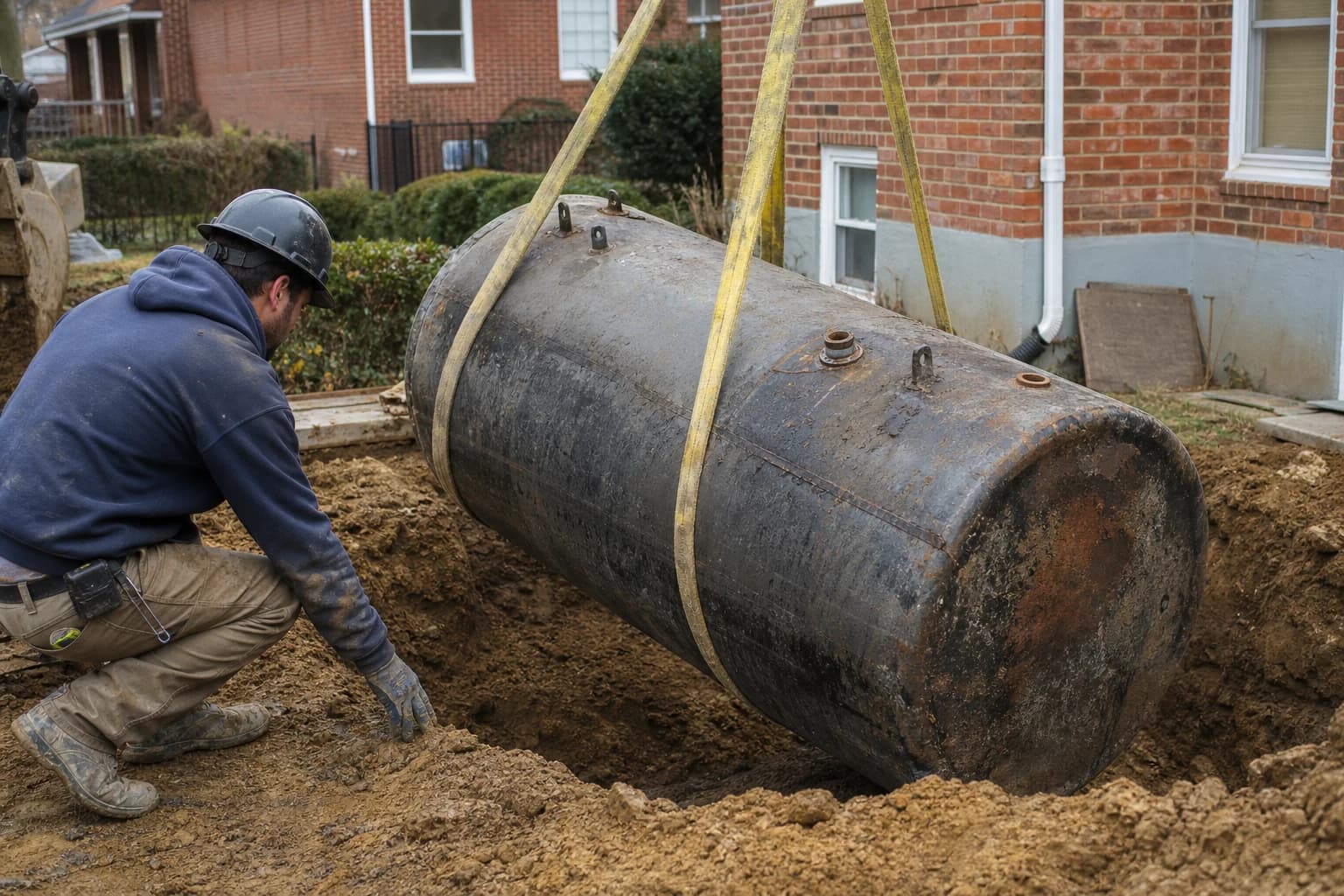
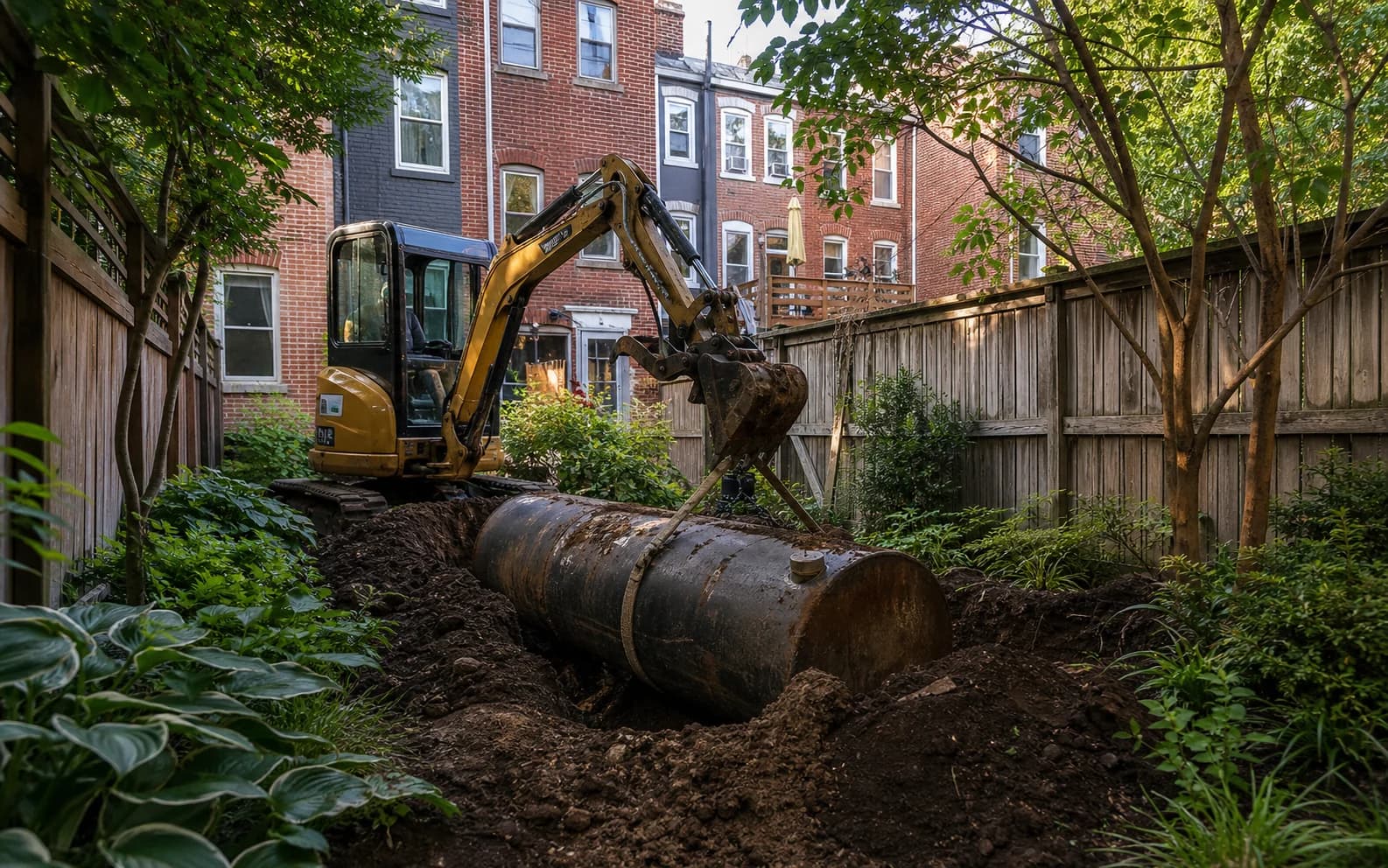
A buried residential heating-oil tank lifted from an open excavation

Buried Oil Tank Removal on a Baltimore Lot

A steel tank in the side yard or under the back garden, usually 275 or 550 gallons, put in when the house still burned oil. The fill pipe and vent pipe in the grass are normally the only thing left above ground.

This is the version with the full regulatory sequence attached: notice to MDE thirty days ahead, a certified remover on site, soil checked in the open hole, and a closure record at the end.

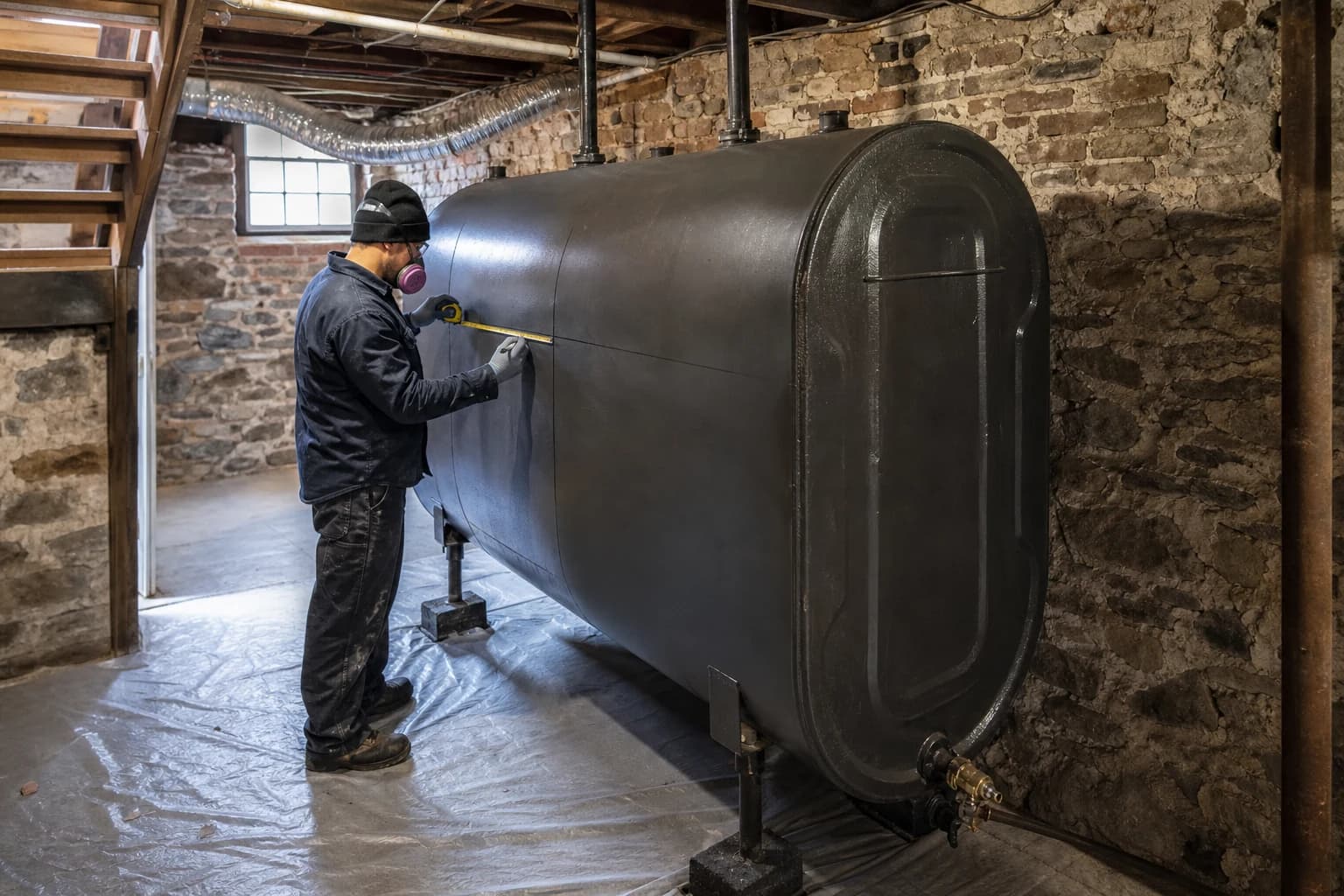
A technician measuring a cleaned steel heating-oil tank in a Baltimore basement

Basement Oil Tank Removal in a Baltimore Rowhouse

A tank sitting on the cellar floor, often behind a wall that was built after it. Getting it out of a rowhouse means cutting it down where it stands, because nothing that size is coming up a Baltimore basement stair whole.

The rule people miss is that the fill pipe and the vent pipe leave the property too, not just the tank.

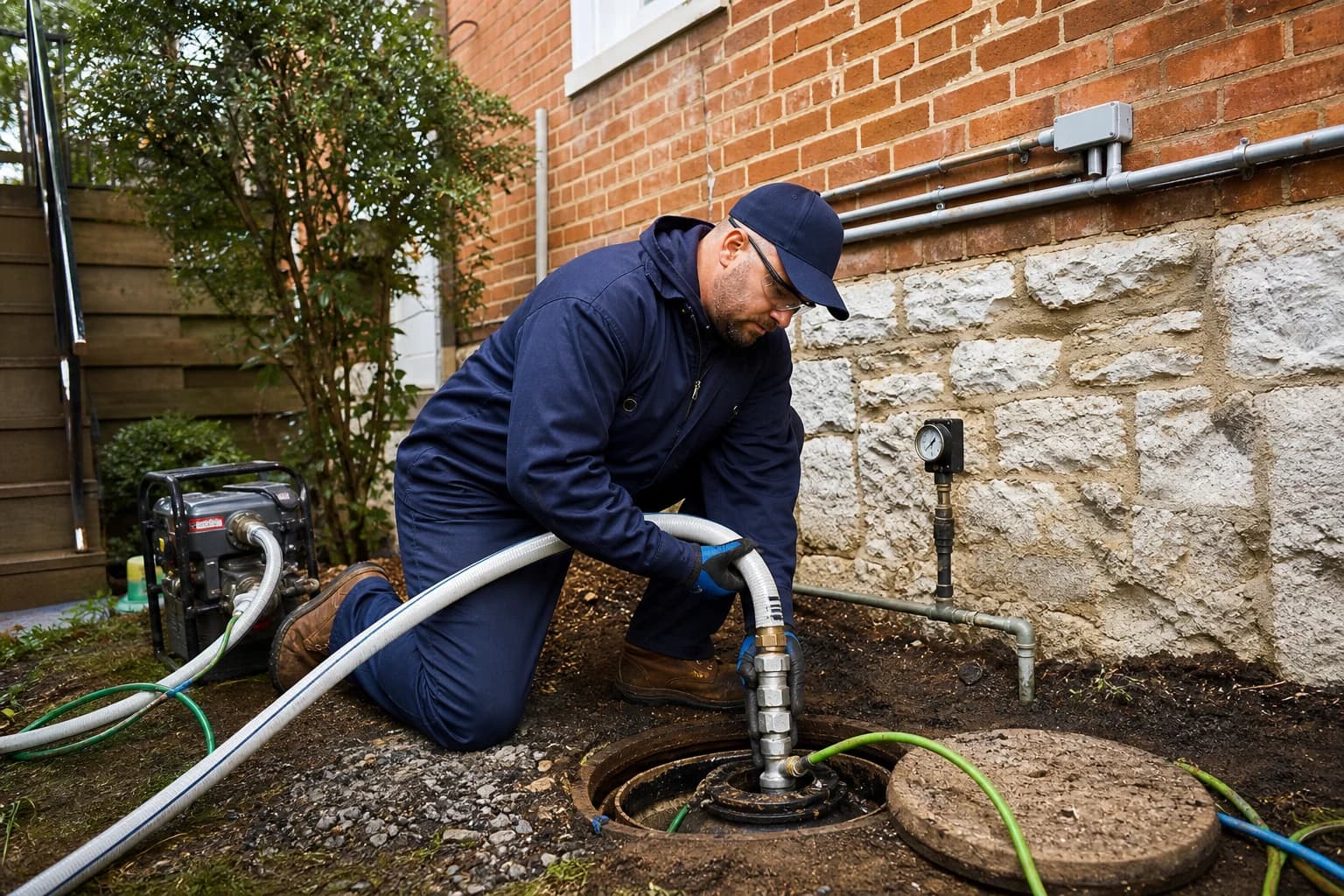
A technician preparing an inaccessible residential tank for approved filling in place

Oil Tank Abandonment in Place in Baltimore

Sometimes the tank sits under a rowhouse footing, a shared party wall or a utility run, and taking it out would damage something that has to stay up.

Maryland allows the tank to be filled and left, but only on MDE approval and an engineer's report behind it. It is a narrower door than most people are told.

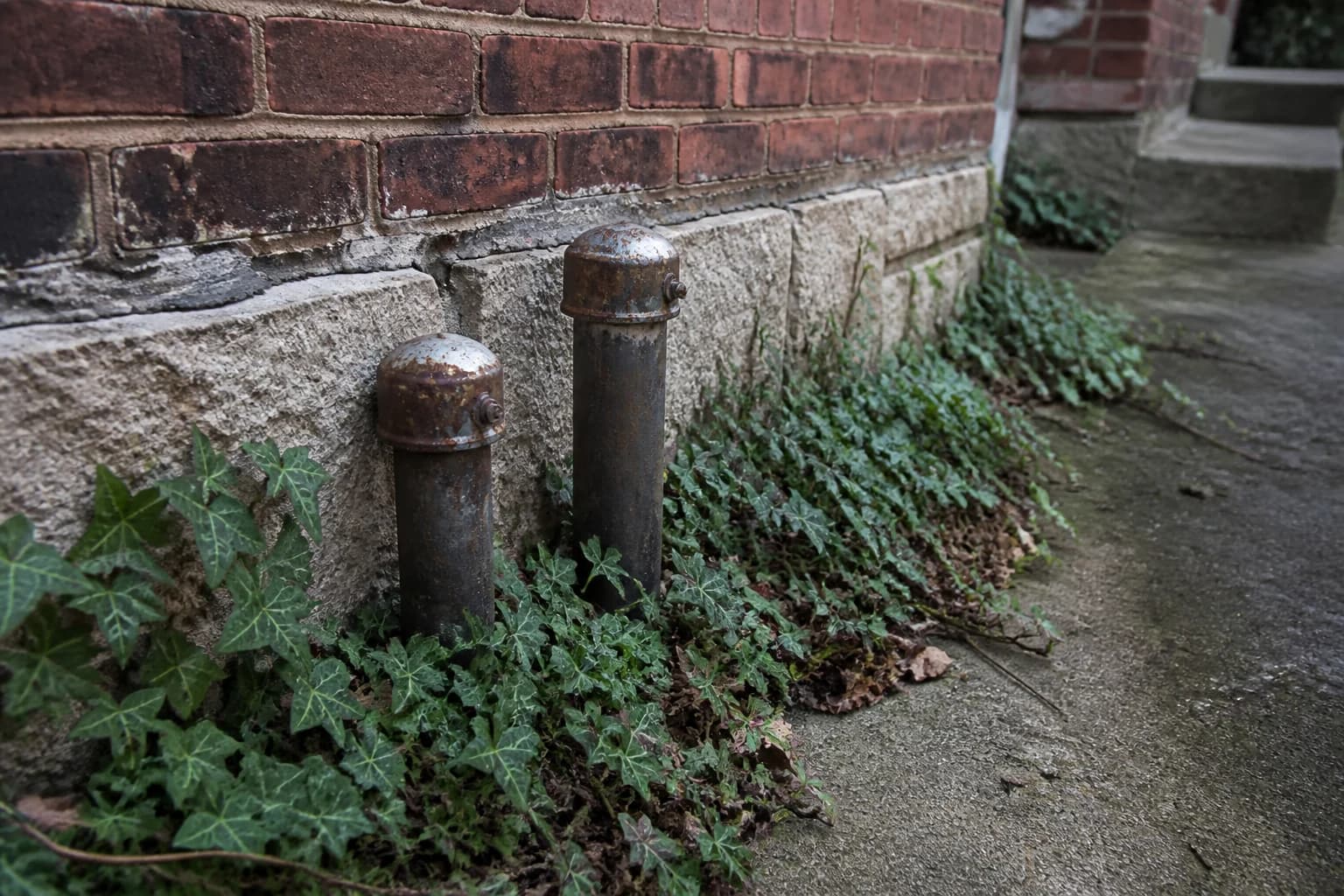
Old heating-oil fill and vent pipes beside a Baltimore brick rowhouse

Unrecorded Oil Tanks on Baltimore Properties

A capped line in the basement wall, a patch in the yard that dries first, a settlement disclosure that says nothing either way. Plenty of Baltimore houses converted to gas decades ago and simply stopped mentioning the tank.

Baltimore County keeps removal records per property and will release them on request. Inside the city there is no equivalent office, so the record you are looking for may only exist if somebody filed it with MDE at the time.

The Thirty Day Closure Deadline in Maryland

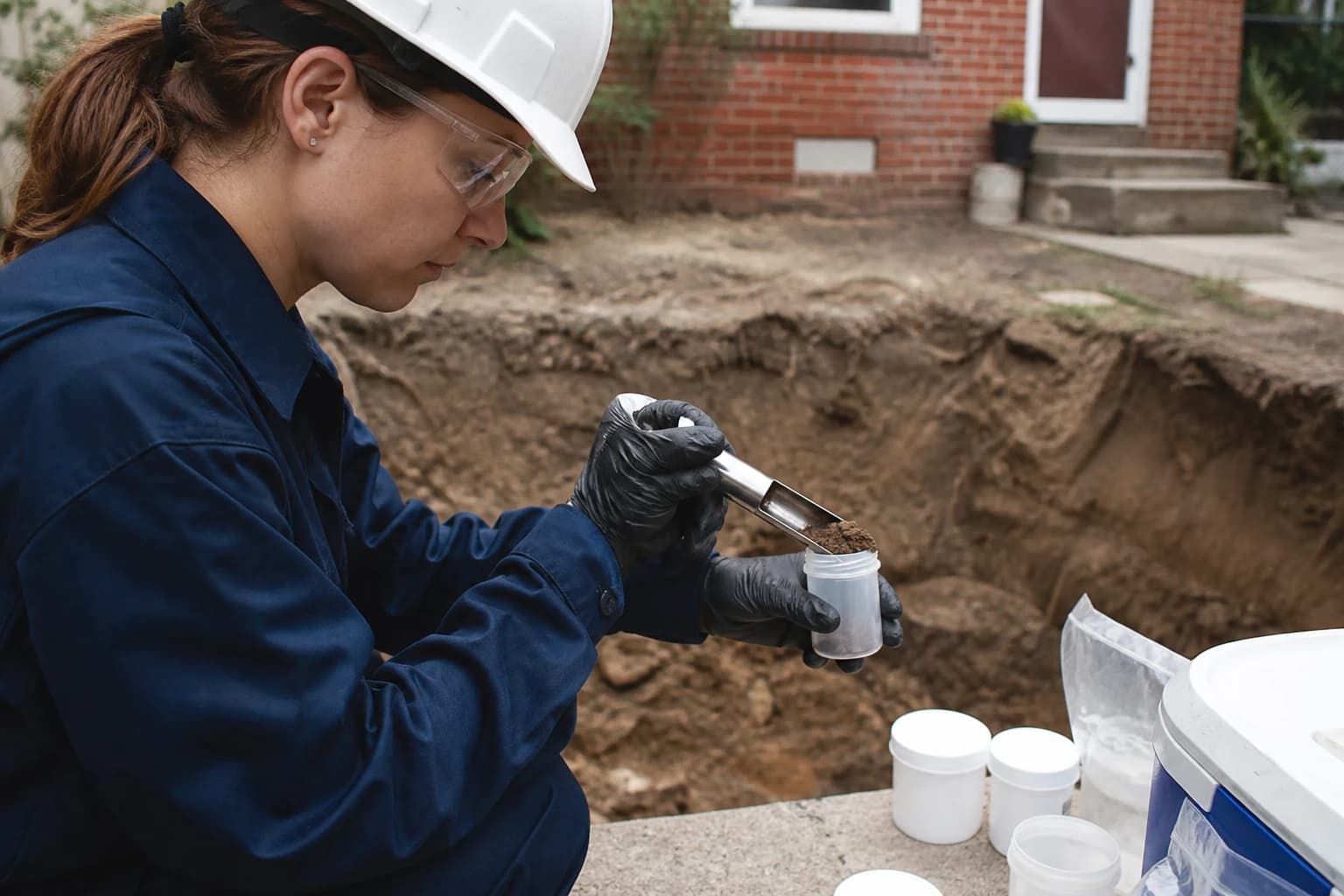
A field technician collecting a soil sample from an open residential tank excavation

COMAR 26.10.01.13 covers residential heating oil tanks, and it puts a clock on closure. Permanent closure has to be completed within thirty days of the determination that the tank will be permanently closed. The trigger is the decision, not the boiler failing and not the house selling.

For an underground tank the second clock runs the other way. COMAR 26.10.10.02 requires notice to MDE at least thirty days before the closure begins, then a confirmation forty-eight hours before work starts. Read together, the sensible order is to file the notice on the day you decide, not on the day you book a machine.

Nobody is standing over a Baltimore homeowner with a stopwatch. The reason to respect the sequence is that the closure record is the thing a buyer's attorney asks for years later, and a record that shows the notice and the work in the wrong order is a record with a question attached to it.

COMAR 26.10.01.13 and 26.10.10.02, read 22 August 2026. Facts F1 and F7.

Which Baltimore Your Property Sits In

Old heating-oil fill and vent pipes beside a Baltimore brick rowhouse

Baltimore City and Baltimore County are separate governments, and for tank work they behave differently. This is the single most useful thing to establish before anything else, and it takes one look at the address.

In Baltimore County, the Ground Water Management Section inside the Department of Environmental Protection and Sustainability handles residential underground storage tank removal. The County issues a permit and sends its own inspector to the job, and the inspector and the contractor together decide whether the soil under the tank is dirty. The County also publishes a certified tank removal contractor list and holds per-property records of past removals.

In Baltimore City there is no county-level groundwater office at all. MDE governs the tank directly, and the City's involvement runs through the Department of Housing and Community Development permit counter rather than an environmental section. A contractor who works one side of the line and quotes you the other side's process is describing a job that is not yours.

Baltimore County Ground Water Management and Baltimore City DHCD, read 22 August 2026. Facts F23 and F24. The County permit fee is not published anywhere we can reach and is listed as an open item on the sources page.

Who Maryland Allows to Close an Underground Tank

Under COMAR 26.10.06 the state certifies individuals, not companies, in four categories. A UST System Technician installs, upgrades, repairs and closes. A Heating Oil Technician is limited to heating oil systems of 2,000 gallons or less for consumptive use, which is every house tank in Baltimore. A UST System Remover does closure and change-in-service only. A UST System Inspector inspects.

The wording is narrow: an individual may only perform UST system work for which they hold a certification. Certifications run two years, the examination pass mark is 90 percent, and renewal wants either recent training plus six jobs, or a retest.

Here is the part almost every page in this market gets wrong. That certification requirement is about underground systems. MDE's position on a residential heating oil tank that sits above ground is that a certified remover is not required, and that a contractor familiar with heating oil equipment is the sensible choice instead. An aboveground tank is not unregulated, because COMAR 26.10.01.13 still says how it is closed. It is a different requirement, and telling the two apart is the whole job of a first conversation.

COMAR 26.10.06.01 and Maryland OneStop, read 22 August 2026. Facts F11 and F12.
The Money That Is No Longer There

Maryland ran a reimbursement program for residential heating oil tank cleanups, and a lot of the advice still circulating in Baltimore was written while it was open. Environment Article 4-705(b)(2) closed the residential window on 30 June 2024.

It matters because the numbers were real. The program carried a $500 deductible and, before July 2022, a $20,000 ceiling per occurrence, later tiered down by property value. A homeowner reading a 2023 article and budgeting around a $20,000 backstop is budgeting against something that no longer exists.

Md. Code, Environment 4-705(b) and COMAR 26.10.14.08, read 22 August 2026. Facts F14 and F16.

Oil Tank Removal Cost in Baltimore and Baltimore County

A restored Baltimore rowhouse yard after underground tank removal

No figure on this site is ours, because there is no partner behind it yet and a Baltimore range we invented would be a made-up number with a city name on it.

What can be said honestly is where the money goes: the excavation and the machine, pumping and disposing of what is still in the tank, laboratory analysis on the soil samples, clean fill, and putting the surface back. On a Baltimore rowhouse the surface is often the biggest single unknown, because a tank under a brick patio or a poured pad brings a demolition and a reinstatement with it.

Two quotes for the same buried tank can differ by a thousand dollars and both be honest, because one of them prices the sampling line and the reinstatement line and the other leaves them to be settled once the hole is open.

What a Heating Oil Release Looks Like in Baltimore

On 21 July 2026 about fifty gallons of home heating oil reached a storm drain at Highland Avenue and Brewers Green Way in Canton. MDE said there was no significant public safety concern, and residents reported greasy patches and an oil odor on the street the next morning. Reporting did not establish a cause.

Fifty gallons is a small fraction of a 275 gallon tank. It is worth knowing the scale, because the common assumption is that a leak announces itself, and at that volume it announced itself as a smell and a stain rather than anything dramatic.

If you can smell oil, see product, or find a wet patch that does not dry, that is a release and it is reportable. Reporting sits under COMAR 26.10.08 and corrective action under COMAR 26.10.09, and the number to call is MDE's Oil Control Program on (410) 537-3442.

The Baltimore Sun, 21 July 2026, and COMAR 26.10 chapter list. Facts F21 and F18.

Oil Tank Questions From Baltimore Owners

Do I have to remove an old oil tank in Baltimore, or can I leave it?

If it is out of service it has to be permanently closed, and COMAR 26.10.01.13 gives thirty days from the decision to do it. Closure normally means removal. Leaving an underground tank in the ground is a separate route that MDE has to approve first, and it needs a professional engineer's report showing removal would damage nearby structures or utilities.

Does Baltimore City require a permit to remove an oil tank?

The City's permit categories cover tank installation thresholds and demolition, and they do not publish a removal-specific permit type. That gap is listed as an open item on our sources page rather than filled in with a guess. Baltimore County is different and clearly does require a permit plus a County inspector on site.

How long does an oil tank removal take in Baltimore?

The excavation on a straightforward yard tank is normally a single day. The calendar around it is longer, because MDE wants thirty days notice before an underground closure begins and the laboratory turnaround on soil samples runs after the hole is closed. Ask about the paperwork dates, not the digging date.

Is there still money available for oil tank removal in Maryland?

No. The residential reimbursement window in Environment Article 4-705(b)(2) closed on 30 June 2024. Pages written before then describe a $500 deductible and limits up to $20,000, and those figures were accurate at the time and are not available now.

Who do I call about an oil smell in a Baltimore basement?

MDE's Oil Control Program, on (410) 537-3442. A smell with no visible product is still worth reporting, and the program sits at 1800 Washington Boulevard inside the city rather than somewhere in Annapolis.

Does a certified contractor have to remove an aboveground oil tank in Maryland?

For an aboveground residential heating oil tank, MDE's position is that a certified UST remover is not required, and that the sensible choice is a contractor who knows heating oil equipment. The tank still has to be emptied, cleaned and taken off the property with its fill and vent pipes under COMAR 26.10.01.13. Underground is the case where certification is required.

What paperwork should I be holding when the job is done?

The MDE notification, the soil sampling results, evidence of where the tank went for disposal, and the closure record. COMAR 26.10.10.05 covers closure records. In Baltimore County you should also have the County permit and the inspector's report of findings.

Ask About An Oil Tank in Baltimore, MD

Tell us where the tank is, what is over it, and whether the address is city or county. We will tell you which sequence applies, what has to be filed before anyone digs, and what you should be holding at the end.

No phone number appears on this site because there is no line to answer it. Everything happens in writing, which also means you keep a copy of what was said.

Send Your Baltimore Tank Details

Say where the tank sits and whether the address is inside Baltimore City or in Baltimore County. Those two answers decide the whole sequence, and we will set it out for you.